You just invested a significant amount of money into your dream kitchen upgrade. Seeing cloudy spots or sticky residue on your beautiful new surfaces is incredibly frustrating. The good news is that restoring that original factory shine is entirely possible with a few simple adjustments to your routine.
- The Best Cleaner: Use a soft microfiber cloth mixed with warm water and a few drops of mild dish soap.
- Immediate Action: Always wipe up spills immediately to prevent sticking.
- Strictly Avoid: Abrasive sponges, harsh chemicals, and acidic cleaners (these will permanently etch the polymer resin layer).
- For Dried Spills: Use a plastic putty knife to gently scrape away the debris.
- Heat Protection: Always place hot pans on a trivet to prevent irreversible thermal shock.
What Is The Best Daily Cleaning Routine For Engineered Stone Care?
Consistency is your best friend when it comes to daily upkeep. You do not need expensive proprietary sprays to keep your space looking pristine. A basic, gentle approach works best for regular wiping.
Follow these daily steps for flawless quartz surface upkeep:
- Clear the area: Remove all appliances, cutting boards, and mail from the surface.
- Mix your solution: Add three drops of gentle dishwashing liquid to a bowl of warm water.
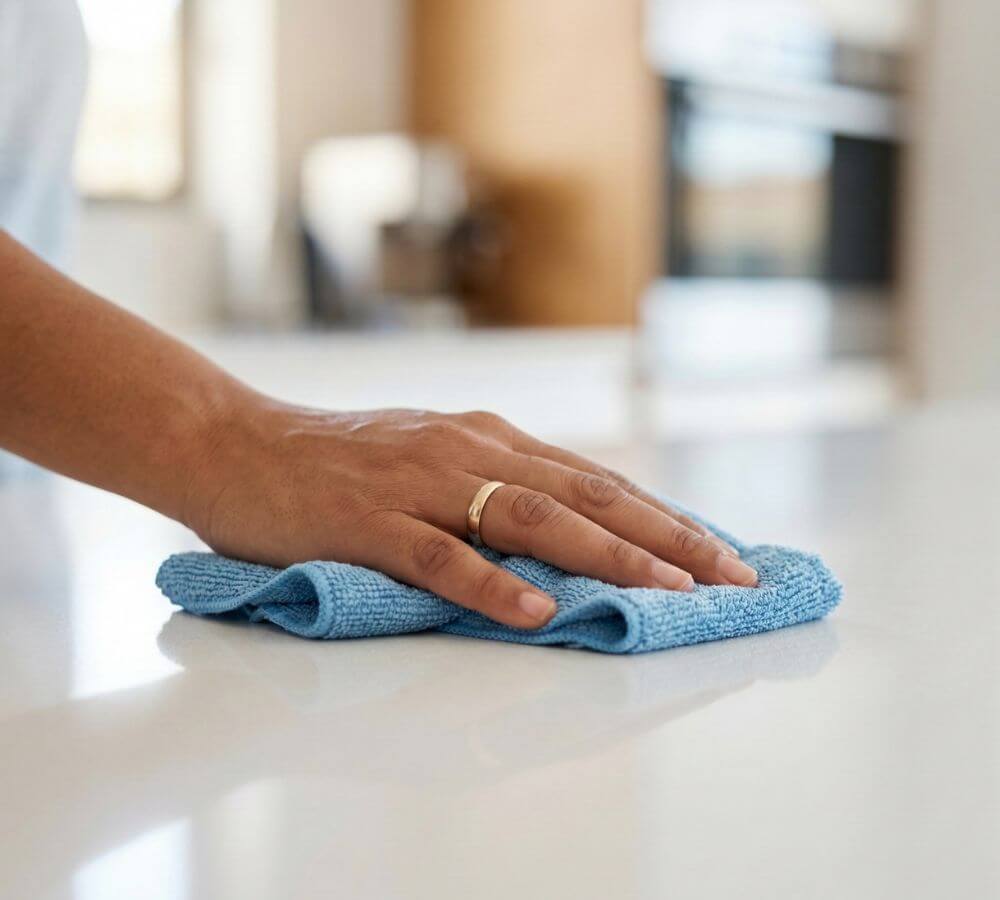
- Wipe gently: Dip a clean microfiber cloth into the soapy water and wipe in broad, circular motions.
- Rinse away residue: Dampen a second clean cloth with plain water to wipe away any leftover soap film.
- Dry completely: Buff the surface dry with a third microfiber towel to prevent streaks from forming.
Which Chemicals Will Ruin My Kitchen Worktops?
Many homeowners accidentally damage their beautiful new spaces by using the wrong cleaning products. Engineered stone is incredibly durable against physical impact but highly sensitive to extreme pH levels. The polymer resins that bind the stone together will dissolve if exposed to harsh chemicals.
Consult this quick reference table before reaching under your sink:
| Product Type | Is It Safe For Quartz? | Reason |
|---|---|---|
| Mild Dish Soap | Safe | Gentle on resins and cuts through daily grease. |
| Isopropyl Alcohol | Safe (in moderation) | Lifts stubborn ink or dye without degrading the finish. |
| Bleach | Unsafe | Causes permanent discoloration and weakens the surface. |
| Vinegar | Unsafe | Highly acidic and will etch the top protective layer. |
| Abrasive Scouring Pads | Unsafe | Leaves micro-scratches that trap dirt and dull the shine. |
| Glass Cleaner | Safe (ammonia-free only) | Great for a quick, streak-free shine after wiping up water. |
How Do I Remove Stubborn Stains From Washing Quartz Islands?
Life happens, and sometimes you miss a spill until it dries into a stubborn, sticky mess. Panic often sets in when you see dried red wine or turmeric on your pristine white island. Thankfully, you can remove most organic stains safely without calling a professional.
Here is the most effective process for handling tough spots:
- The Plastic Scraper Method: Gently chip away dried food or gum using a flexible plastic putty knife. Never use metal blades.
- The Isopropyl Alcohol Trick: Dampen a paper towel with rubbing alcohol and let it sit on ink or marker stains for exactly two minutes. Wipe it away swiftly.
- The Glass Cleaner Soak: For sticky syrups, spray an ammonia-free glass cleaner directly on the spot. Let it sit for five minutes before wiping it away with a damp cloth.
Do I Need To Seal My Kitchen Worktops?
One of the biggest misconceptions in the home improvement industry is that all stone requires routine sealing. This is simply not true for engineered products. If you are still deciding between materials, our guide on Which Countertop Material Is Best for Your Kitchen highlights how maintenance needs differ across options.
Here is the basic breakdown:
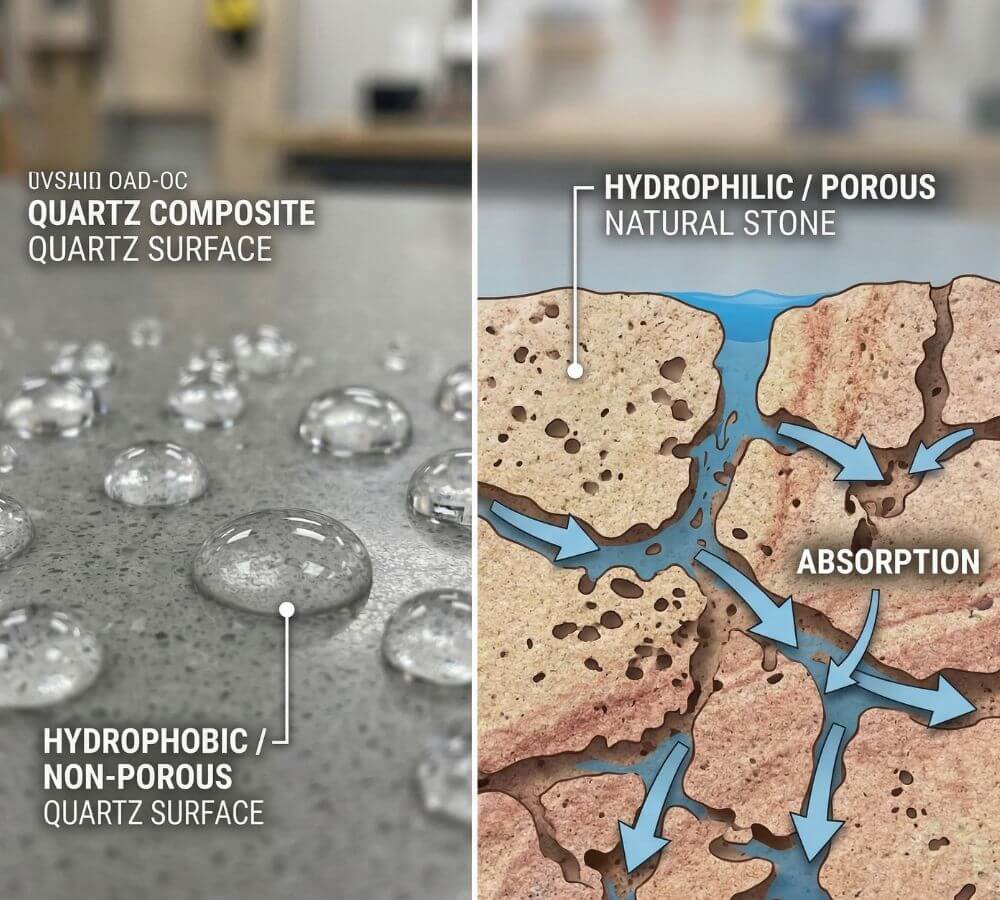
- Natural Stone: Granite and marble are highly porous and require regular liquid sealants to stop stains from sinking in.
- Engineered Stone: Quartz is entirely non-porous. During the manufacturing process, the crystalline structure of quartz is permanently bound together with durable polymer resins. This means liquids cannot penetrate the surface to cause deep stains. You will never need to purchase or apply a liquid sealant.
How Can I Protect My Countertops From Heat Damage?
While these surfaces are highly resistant to scratches and stains, they have a major weakness when it comes to extreme temperatures. The resin binders can melt or scorch if they come into direct contact with a hot pan straight from the stove. This damage is known as thermal shock.
One of our recent projects during a kitchen renovation in Mississauga highlighted this issue: the homeowners accidentally set a hot slow cooker directly on their island, leaving permanent marks. In fact, ignoring heat protection is consistently one of the biggest Kitchen Renovation Mistakes Homeowners Regret.
Always follow these preventative measures:
- Keep thick silicone trivets permanently stationed near your stovetop.
- Use insulated hot pads under slow cookers, electric skillets, and toaster ovens.
- Never place hot baking sheets directly onto your island after pulling them from the oven.

Ready To Upgrade Your Kitchen Space?
Protecting your investment is easy when you have the right knowledge and habits in place. If your current space feels outdated or your old counters are beyond saving, it might be time to consider a complete transformation.
Would you like me to share our top Small Kitchen Renovation Ideas for Townhouses to help you brainstorm for your upcoming project?