A kitchen can have gorgeous cabinets and a stone island and still feel gloomy if the daylight never reaches the counter. Getting more natural light in your kitchen is one of the highest-impact changes you can make, and it works on three levels: adding light at the source, bouncing the light you already have, and opening up the room so it can travel. Our team plans daylight into every custom kitchen renovation layout in the GTA from the first sketch, because it is far easier to design in than to bolt on later. This guide walks through all three levers, from free tweaks to full renovations.
Work through them in order. Squeeze everything you can out of bounce and sightlines first, since those are cheap, then decide whether adding a window, skylight, or glass door is worth it for your space. A quick daylight check near the end helps you see where you stand.
In This Article
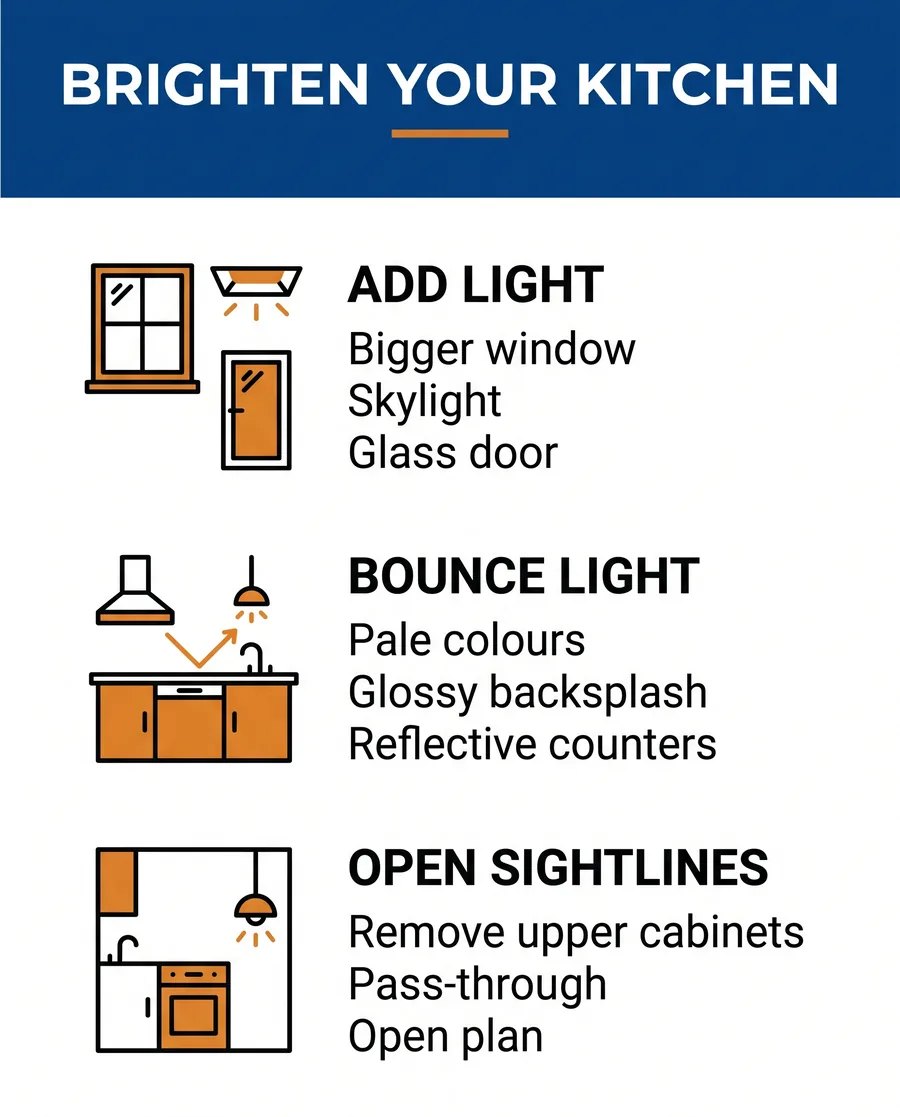
Add More Daylight at the Source
Nothing beats more glass. Every other trick only manages the light you let in, so if your kitchen is genuinely starved of daylight, the real answer is a bigger or extra opening. There are more ways to do this than most homeowners realise.
Enlarge or Add a Window
The classic move is a larger window over the sink, or a new window on a sunny exterior wall. Widening an existing opening is often simpler than starting fresh because the plumbing and framing are already nearby. On a south or west wall you get generous light, so pair it with the right glazing to manage afternoon heat. This is usually the single biggest win available to a GTA kitchen with an exterior wall to spare.
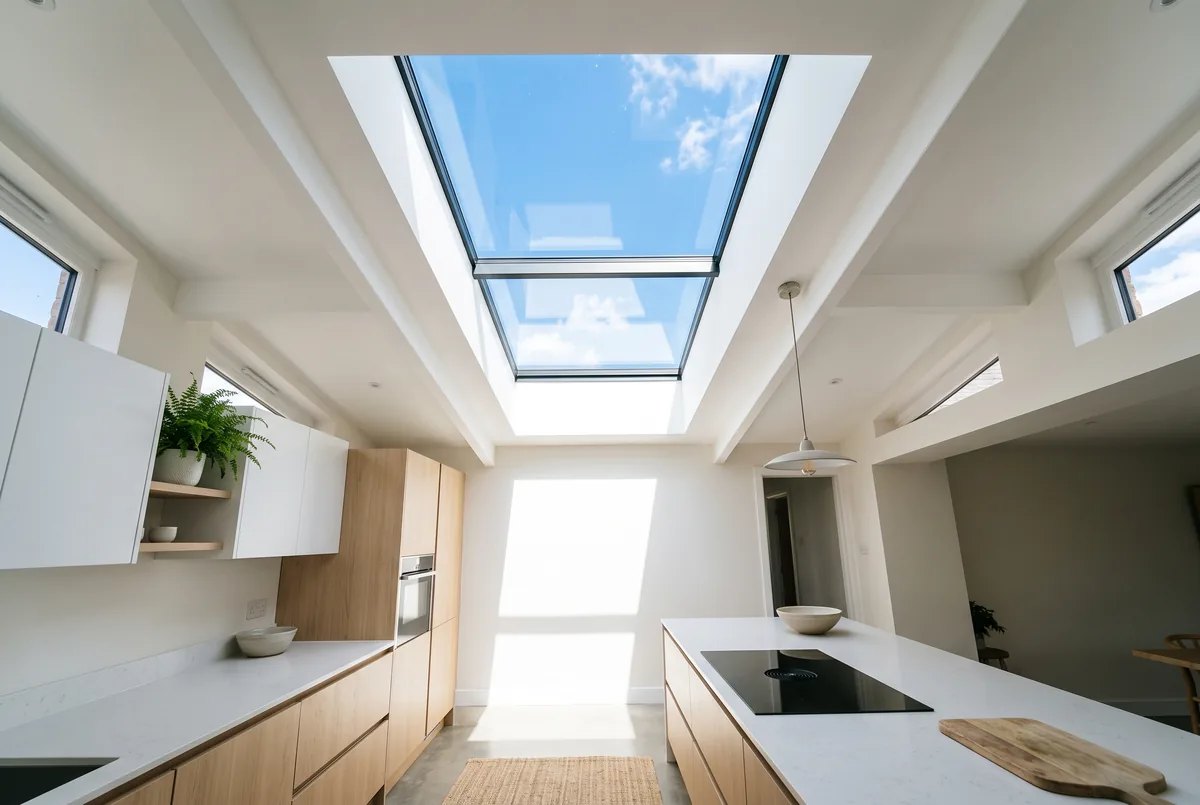
Bring in a Skylight From Above
When there is no free wall, look up. A skylight floods the middle of the room with even overhead daylight that side windows cannot reach, which is transformative in a top-floor or single-storey kitchen. If a full skylight is too much roof work, a tubular skylight channels daylight down a compact reflective tube and drops a bright pool of light onto the counter with a fraction of the disruption.
Trade a Solid Wall or Door for Glass
If your kitchen backs onto a yard or deck, swapping a solid door for a glass or patio door adds a wall of light plus a view and easy access outdoors. Glass-panelled interior doors and interior windows between the kitchen and an adjacent room can borrow light too, so a bright living room can lend some of its daylight to a darker kitchen next door.
Did You Know?
The type of glass matters as much as the size of the opening. Energy-efficient windows and skylights certified by ENERGY STAR Canada let daylight pour in while keeping summer heat and winter cold in check, so you get the brightness without a comfort or energy penalty. Ask your renovator to match the coating to the direction each opening faces.
Bounce the Light You Already Have
Once light is in the room, your finishes decide how far it travels. Dark, matte surfaces swallow it; pale, reflective ones pass it along. This is the cheapest lever of the three and belongs in every kitchen, whether or not you touch a single window.
Go Pale and a Little Glossy
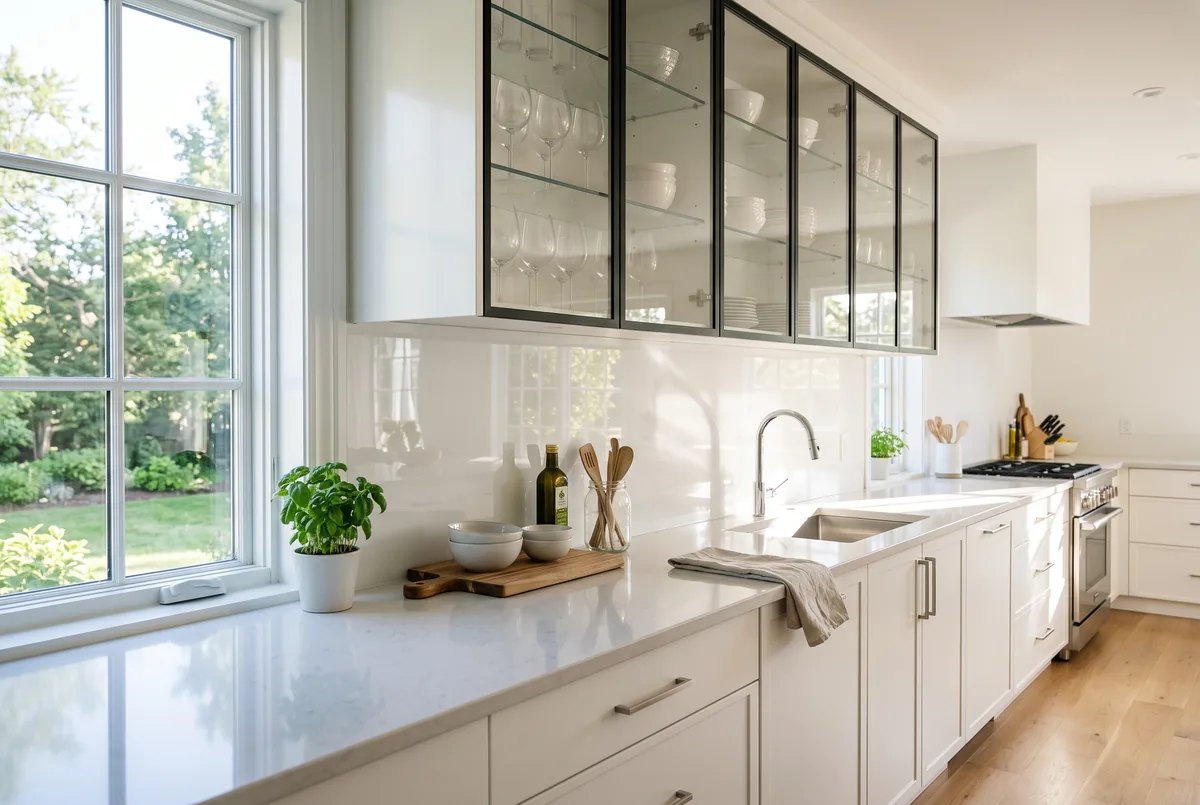
Warm-white and light walls, ceilings, and cabinets act like giant reflectors, pushing daylight deep into the room. A dead-flat finish absorbs light, so a soft satin or semi-gloss on cabinets and trim helps them bounce it instead. In a dark kitchen, simply repainting from a heavy colour to a warm white can feel like someone turned the lights on.
Let Counters and Backsplash Do the Work
Reflective surfaces at counter height throw light back up into the room. A light quartz counter, a glossy or glass backsplash, and even a polished tile floor all keep daylight moving rather than letting it die in a dark corner. A mirror or glass-front upper cabinet on the wall opposite the window doubles the effect by reflecting the view of the glass itself.
Save Your Money
Before you budget for new windows, spend a weekend on the free wins: take down heavy blinds, clean the glass and the screens, trim any shrubs shading the window outside, and repaint in a warm white. Homeowners are regularly amazed how much brighter the kitchen feels for almost nothing, and it tells you how much extra glass, if any, you actually need.
Open Up the Sightlines
Light needs a clear path. A kitchen chopped up by a wall of upper cabinets or closed off from a bright adjacent room will always feel darker than its windows suggest. Opening things up lets the daylight you have spread across more of the space.
Rethink the Upper Cabinets
A full bank of upper cabinets on a window wall blocks and boxes in the light. Swapping some for open shelving, glass-front doors, or removing them entirely opens the wall up and lets light skim across it. It is a favourite trick in bright, modern kitchen remodels, and you can weigh it up in our guide to open shelving versus cabinets.
Connect to the Rooms Around It
Taking down or opening a wall between a dark kitchen and a sunnier living or dining room lets daylight flow between them. A full open-plan layout is the big version; a generous pass-through or an interior window is the lighter-touch version that still borrows meaningful light from next door.
Comparing the Daylight Upgrades
If you are weighing the bigger structural moves, here is how they stack up on light delivered against effort and cost. Most bright kitchens use a combination: one way to add light, plus reflective finishes and open sightlines to spread it.
| Daylight Upgrade | How Much Light | Effort and Cost | Best When |
|---|---|---|---|
| Enlarge a window | High, especially over the sink | Moderate, may need a lintel | You have an exterior wall to work with |
| Add a skylight | Very high, overhead and even | Higher, roof work involved | Top-floor kitchen with no free wall |
| Tubular skylight | Medium, a bright pool of daylight | Lower than a full skylight | You want daylight without a big opening |
| Glass or patio door | High, plus a view and access | Moderate | Kitchen backs onto a yard or deck |
| Reflect and open up | Low cost, real perceived gain | Low, mostly finish choices | Every kitchen, alongside the above |
Please note: This article is general design guidance only. Cutting new windows, skylights, or doors is structural work that needs proper framing, flashing, and permits. Kitchen and Bath Reno is not liable for outcomes from actions taken based on this content. Always have a qualified renovator and, where required, an engineer assess load-bearing walls and roofs before you open them up.
People Often Ask: What Adds the Most Natural Light for the Money?
For most GTA kitchens it is enlarging an existing window on a sunny wall, because the opening is already there and you are mainly paying to make it bigger. Where there is no spare wall, a tubular skylight gives the best light-per-dollar from above. Pair either one with pale, reflective finishes, which cost little and make every bit of that new daylight go further.
Measure the Natural Light in Your Kitchen
Before you decide how far to go, it helps to know where you stand. A simple ratio of glass area to floor area gives you a rough read on whether your kitchen is under-lit. Pop your numbers into the check below, then use it to judge whether bounce alone will do or whether it is time to add glass.
Daylight Check for Your Kitchen
A rough rule-of-thumb ratio, not a code calculation. Your renovator confirms what your space needs.
Pro Tip
Watch your kitchen for a full day before you commit to changes. Note when and where the sun actually lands, and which corners stay gloomy at noon. That real pattern, not a guess, tells you exactly where a new window or skylight would earn its keep, and often reveals that a strategic finish change fixes the dark spot for far less.
Frequently Asked Questions
What Is the Cheapest Way to Get More Natural Light in a Kitchen?
Start with the free and low-cost moves before you cut into a wall. Swap heavy curtains or dark blinds for sheers or nothing at all, and give the window glass a proper clean, because grime and screens quietly steal daylight. Then work on bounce: repaint in pale, warm-white tones, choose a light, semi-gloss cabinet finish, and add a mirror or a glossy backsplash on a wall opposite the window. None of that is structural, yet together it can make a dim kitchen feel noticeably brighter. Once you have squeezed everything out of the light you have, adding glass is the next step.
Do Skylights Work in a Kitchen, and Do They Leak?
Skylights are one of the best ways to light a kitchen because they deliver bright, even daylight from above, reaching the centre of the room that side windows never touch. They are ideal for top-floor or single-storey kitchens with no free wall for a window. The old fear of leaks is largely outdated: a modern, properly flashed skylight installed by a qualified roofer is reliable and well sealed. For a smaller budget or a lower profile, a tubular skylight funnels daylight down a reflective tube and lands a surprising pool of light with far less roof work.
Will Bigger Windows Make My Kitchen Too Hot or Cold?
Not with the right glass. Modern energy-efficient windows use low-emissivity coatings and insulating gas fills that let daylight in while cutting the summer heat and winter loss that older single-pane glass suffered. Look for units certified by ENERGY STAR Canada, which are rated for our climate. Orientation matters too: a big south or west window may want a low-gain coating or an overhang to tame afternoon sun, while a north window brings soft, steady light with little heat. Your renovator will match the glazing to the wall it sits on.
How Can I Brighten a North-Facing Kitchen?
North-facing kitchens get soft, even light with no direct sun, which is lovely but can feel flat and cool. The fix is to maximise and warm it. Keep the glass as generous as the wall allows, then lean hard on bounce: warm-white walls, pale cabinets, and reflective counters spread that gentle light around. Avoid cool grey-blue paints that can read dreary in northern light, and choose warm-white finishes instead. Layer in good artificial lighting at a warm colour temperature for evenings (read our full guide on how to choose the perfect kitchen lighting), and the room will feel bright and welcoming despite the aspect.
Does More Natural Light Actually Add Value to My Home?
It does, both in how the home feels and how it sells. Bright, sunny kitchens are one of the features buyers consistently gravitate to, and a light-filled room simply photographs and shows better, which matters in the competitive GTA market. Beyond resale, daylight has real day-to-day benefits: it makes the hardest-working room in the house more pleasant to cook and gather in, and it can trim your reliance on electric light during the day. It is one of the upgrades that pays you back every single morning, not just at sale time.
Kitchen and Bath Reno designs bright, welcoming kitchens across Oakville, Mississauga, Burlington, Milton, Brampton, and Georgetown, and we plan daylight in from the very first drawing. If your kitchen feels dim and you want to know the smartest way to fix it, whether that is a new window, a skylight, or simply the right finishes, explore our kitchen remodeling in Mississauga and Oakville kitchen renovation services, or book a free design consultation to get started.