Walk into a newly renovated bathroom in Mississauga and you will notice the toilet looks different. No gap behind it, no awkward S-bend pipe on show, just a clean shape that sits flush against the wall. That is a back-to-wall toilet, and it has quietly become one of the most requested upgrades we install on bathroom renovation projects across the GTA. So what exactly is it, and is a back-to-wall toilet right for your Mississauga bathroom?
In This Article
What a Back-to-Wall Toilet Actually Is
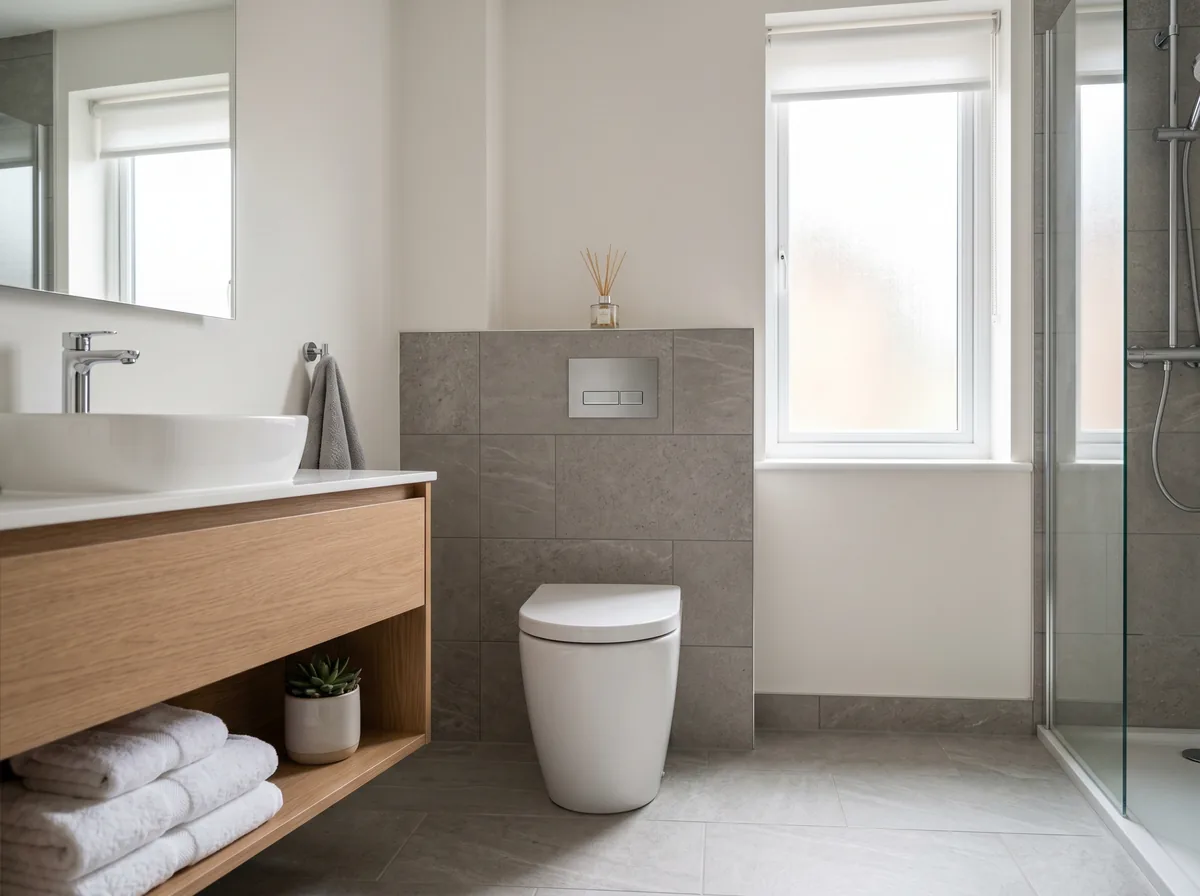
A back-to-wall toilet is a floor-standing toilet whose pan (the bowl) is designed to sit tight against the wall, with the trap, waste pipe, and water supply hidden inside the wall or behind a panel. The cistern (the tank) is concealed too, usually built into a stud wall or a slim furniture unit. From the room, you see only the bowl and a flush plate set into the wall.
Did You Know?
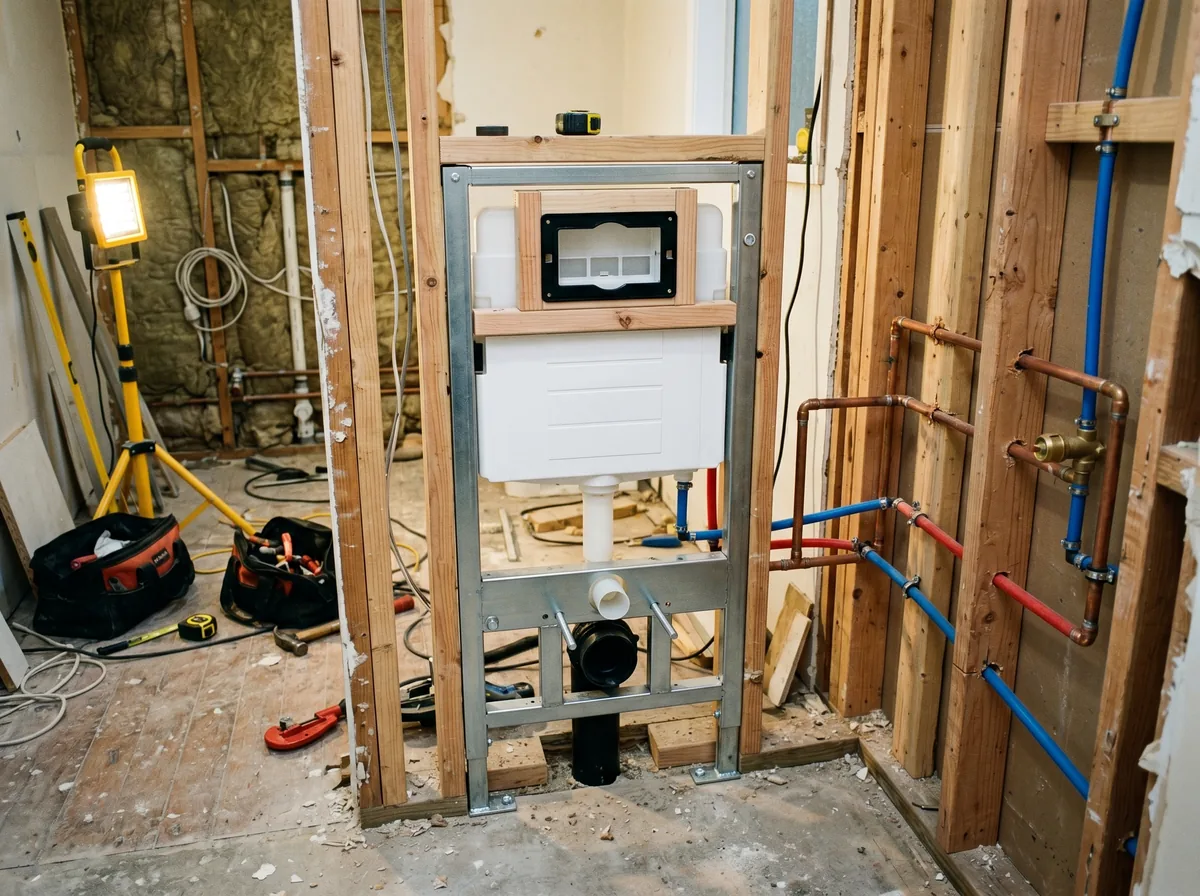
The flush button you see on the wall is just the trigger. The actual tank, called a concealed cistern, lives inside the wall on a steel support frame. Good frames are rated to hold the weight of an adult sitting on the pan, and they include an access hatch behind the flush plate so the working parts can still be serviced.
Back-to-Wall Versus Wall-Hung and Close-Coupled
People often mix up back-to-wall toilets with wall-hung toilets. They are cousins, not twins. Both hide the cistern, but they differ in how the bowl is supported, which changes the look, the cleaning, and the install.
| Toilet style | Bowl support | Floor underneath | Best for |
|---|---|---|---|
| Close-coupled (standard) | Bolts to the floor, tank on view | Pedestal blocks part of the floor | Budgets, quick swaps, most homes |
| Back-to-wall | Stands on the floor, against the wall | Bowl meets the floor, easy to mop around | Clean look without major framing |
| Wall-hung | Bolts to a frame, floats off the floor | Open floor under the bowl | Maximum modern look, easiest floor cleaning |
People Often Ask: What Is the Difference Between Back-to-Wall and Wall-Hung?
A back-to-wall toilet sits on the floor with its bowl pushed against the wall, hiding the pipework behind it. A wall-hung toilet is mounted on a frame inside the wall so the bowl floats above the floor with nothing underneath. Both conceal the cistern. Wall-hung looks the most modern and is the easiest to clean under, but it needs a stronger frame and careful height planning. Back-to-wall is simpler to install and a little more forgiving, which is why many GTA homeowners choose it as the practical version of the same clean look.
The Real Pros and Cons for a GTA Bathroom
No fixture is perfect for every home. Here is the honest balance sheet from the renovations we have done across Mississauga, Oakville, and Burlington.
Where It Wins
- A cleaner, calmer look. Hiding the trap and tank makes even a modest bathroom feel more designed and current, which matters for resale.
- Easier to keep clean. No exposed pipes or tight crevices behind the tank means fewer dust traps and a faster wipe-down.
- Flexible bowl height. Because the support is built in, the pan height can be set to suit the household, including a comfortable height for taller users.
- Quieter flush. A concealed cistern sits inside the wall, so the flush often sounds softer than an exposed tank.
Where It Asks More of You
- Higher upfront cost. You are paying for a frame, a concealed cistern, a flush plate, and the wall build-out, not just a one-piece toilet.
- It needs a stud wall or a duct. The cistern has to live somewhere, which can mean losing a few centimetres of room depth or building a false wall.
- Servicing is different. Repairs happen through the flush-plate access panel, so the install has to leave that access usable. A rushed job that buries the cistern is a future headache.
Pro Tip: Plan the Access Panel Before You Tile
The most common regret we fix on other companies’ work is a concealed cistern that was tiled over with no realistic way to reach the inlet valve or fill mechanism. Decide on the flush-plate location and confirm the frame’s service access early, before the tile goes up. It costs nothing at the planning stage and saves a demolition later.
Is It Right for a Mississauga Bathroom?
Please note: The information here is for general guidance only. Kitchen and Bath Reno is not responsible for any damage, injury, or cost resulting from action taken based on this content. Renovation work that touches plumbing, gas, or electrical must be done by a licensed trade, and many changes require a permit and an inspection in Mississauga and across the GTA. When a job goes beyond simple finishing work, hire a qualified contractor and confirm your local requirements before you start.
- Are you renovating, or just swapping the toilet? A back-to-wall toilet makes the most sense during a full or partial renovation, when the wall is already open and a frame can go in cleanly. As a one-off swap on a finished wall, the extra build-out rarely pays off.
- How much depth can you give up? Concealing the cistern usually pushes the finished wall out by a few centimetres. In a roomy Mississauga ensuite that is nothing. In a tight powder room, measure first.
- What is the look you are after? If a streamlined, built-in feel is a priority and resale value matters, a back-to-wall toilet delivers. If your goal is the lowest-cost reliable fixture, a quality close-coupled toilet is hard to beat.
For most homeowners doing a proper bathroom update, a back-to-wall toilet is a smart, future-proof choice. If you are weighing it as part of a larger project, our team handles bathroom renovations in Mississauga and can tell you on a site visit whether your wall and waste layout suit the design.
What It Costs to Install in 2026
Pricing note: The figures on this page reflect typical market rates in Mississauga and the GTA as of 2026. What you actually pay depends on the product line you choose, your layout, the condition of what is already there, and how much labour the job involves. Always get a written quote and an in-home assessment before committing to a renovation.
A back-to-wall setup costs more than a standard toilet because you are buying several components plus the wall work to conceal them. The ranges below are typical GTA figures to help you budget, not firm quotes.
| Item | Typical GTA range (2026) | Notes |
|---|---|---|
| Back-to-wall pan | $300 to $900 | Quality brands cost more and last longer |
| Concealed cistern and support frame | $350 to $800 | The hidden frame and tank inside the wall |
| Flush plate | $80 to $300 | The visible button, finish and brand vary the price |
| Installation and wall build-out | $600 to $1,800 | Framing, water and waste connection, finishing |
| Typical installed total | $1,300 to $3,500+ | Varies with tiling, access, and existing plumbing |
The biggest swing factor is your existing plumbing. If the waste outlet already sits where the new pan needs it, the job is straightforward. If the drain has to move, expect more labour. This is plumbing work, so it should be done by a licensed plumber, and any drain relocation may need a permit and inspection in your municipality.
How to Plan the Install the Right Way
- Confirm the wall can take a frame. A solid stud wall or a purpose-built support wall is needed to carry the cistern and frame.
- Set the pan height for the household. Built-in support lets you choose a comfortable height, so decide this before the frame is fixed.
- Locate the flush plate and access. Pick a reachable spot and make sure the frame’s service hatch stays usable behind it.
- Coordinate the trades. The plumber, tiler, and carpenter all touch this fixture, so the sequence matters. A general contractor keeps them in step.
Sources and further reading
- Kitchen and Bath Reno, in-house installation experience and 2026 GTA pricing observations.
- This Old House, wall-mounted toilet installation overview (video, embedded above).
- General manufacturer guidance on concealed cistern frames and flush-plate service access.
Frequently Asked Questions
Is a Back-to-Wall Toilet Harder to Fix Than a Normal One?
Not harder, just different. The working parts live inside the wall behind the flush plate, which lifts off to give access to the fill and flush mechanism. The key is that the install leaves that access usable. A properly fitted concealed cistern is fully serviceable, and the flush plate pops off without tools on most models. Problems only arise when an installer tiles over the access or buries the frame, which is why planning the service panel early matters. Done correctly, day-to-day repairs are no more involved than on a standard toilet.
How Much Room Does a Back-to-Wall Toilet Take Up?
The bowl projects out from the wall a similar amount to a normal toilet, but the wall itself usually moves out by roughly five to fifteen centimetres to house the concealed cistern. In a typical Mississauga bathroom or ensuite that loss is barely noticeable. In a very small powder room it can matter, so measure the depth you can spare before committing. If space is extremely tight, a slimline frame or a different toilet style may suit the room better, and a designer can help you weigh the trade-off.
Do I Need a Permit to Install One in Mississauga?
A straight like-for-like toilet swap generally does not require a permit. However, a back-to-wall install often involves moving the water supply or waste drain and building out a wall, and relocating plumbing can trigger a permit and inspection depending on the scope. Rules vary by municipality across the GTA. The safest approach is to use a licensed plumber and a contractor who confirm local requirements before work starts. They will pull any permit you need and arrange the inspection so the finished bathroom is fully compliant.
Are Back-to-Wall Toilets Worth the Extra Cost?
For most homeowners doing a renovation, yes. You get a cleaner look, easier cleaning, a quieter flush, and a fixture that reads as modern and built-in, all of which help a bathroom feel current and support resale value. The premium over a basic toilet is real, mainly because you are paying for the frame, the concealed cistern, and the wall work. If you are renovating anyway and the wall is open, the added cost is modest for the upgrade you get. As a standalone swap on a finished wall, the value is weaker and a quality close-coupled toilet may make more sense.
Can Any Bathroom Have a Back-to-Wall Toilet?
Most can, but it depends on the wall and the plumbing behind it. You need a wall that can carry the support frame, or the room to build one, plus a waste outlet that can connect to the concealed setup. Homes with solid masonry walls or very shallow rooms may need extra framing. The only way to know for sure is a site visit where a renovator checks your wall construction and waste layout. In our experience the large majority of GTA bathrooms can accommodate the design with sensible planning.
The Verdict
A back-to-wall toilet is one of those upgrades that looks like a small change but quietly lifts the whole room. If you are renovating, want a cleaner and more modern bathroom, and can spare a little wall depth, it is well worth the extra cost. If you only need a quick, low-cost replacement on a finished wall, a good close-coupled toilet still does the job.
Download the Free Quick Guide
Take our printable checklist to your planning meeting so nothing about the frame, flush plate, or access gets missed.
Planning a Bathroom Renovation in Mississauga or the GTA?
We design and build bathrooms that look great and work for real life. See our recent renovation projects, learn how we work on our renovation process page, or
contact our team for a free in-home consultation
. Call us at (905) 277-2228.