If you want the short answer, the best kitchen sink material for most GTA homes is either stainless steel or granite composite. Stainless is tough, light, and forgiving of dropped dishes. Granite composite is the quiet, scratch-resistant choice that hides water spots and matches modern countertops. Everything else, from fireclay farmhouse sinks to copper, is a style or budget decision layered on top of those two workhorses. We help homeowners weigh this on every kitchen renovation in the GTA.
In this article
Why sink material matters more than you think
Two sinks can look almost identical in a showroom and behave completely differently after a year of real use. One shrugs off a dropped cast-iron pan; the other chips. One hides limescale; the other shows every drip. The material drives durability, how easy it is to clean, how it sounds, and whether it still looks good when your renovation is five years old.
It also has to play nicely with your countertop. An undermount sink, where the basin sits below the counter for a seamless wipe-down, depends on a solid countertop like quartz or granite.
The six materials compared side by side
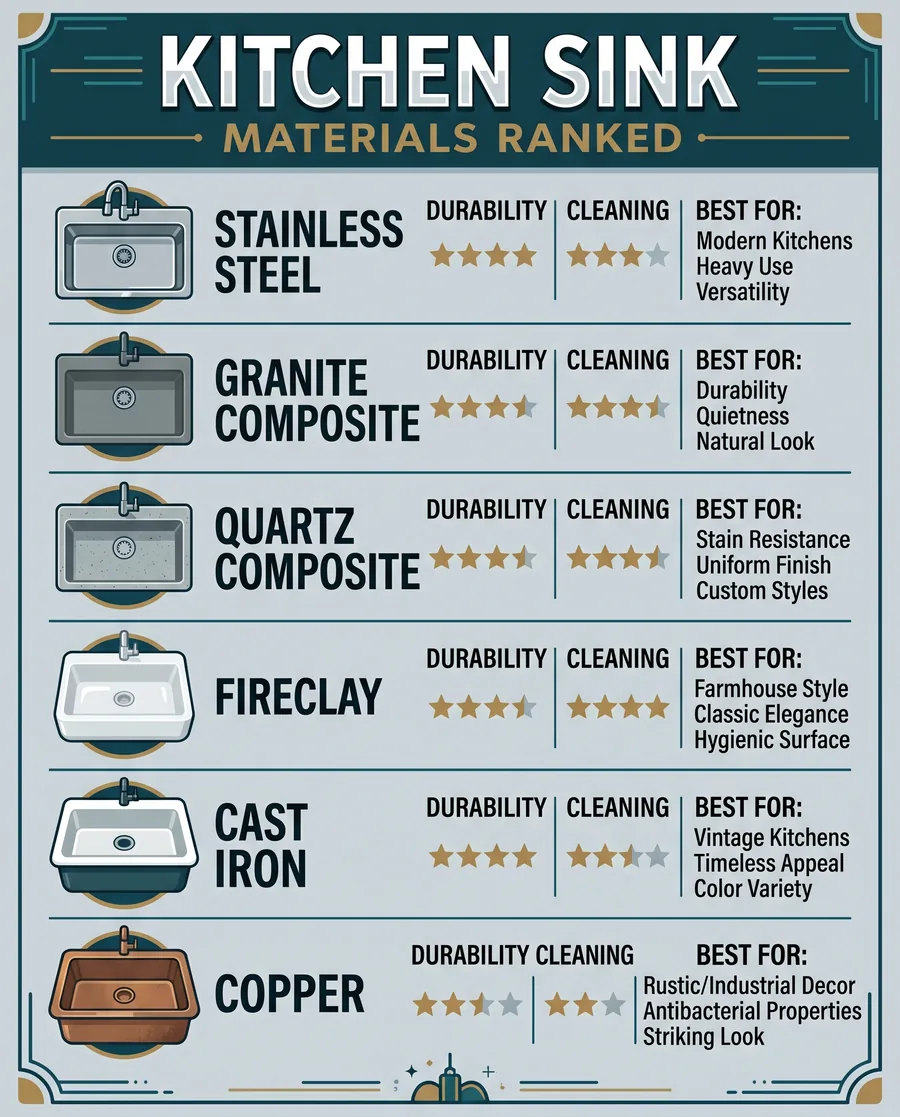
Here is the honest comparison we walk homeowners through. Ratings reflect typical real-world performance, not lab conditions. Use it to shortlist two or three materials, then read the detail below.
| Material | Durability | Easy to clean | Best feature | Watch out for |
|---|---|---|---|---|
| Stainless steel | High | High | Tough, light, affordable | Shows scratches and water spots |
| Granite composite | High | High | Scratch and stain resistant | Heavy; very hot pans can mark cheap ones |
| Quartz composite | High | High | Sleek look, durable finish | Premium price |
| Fireclay (farmhouse) | Medium to high | High | Classic look, glossy and stain resistant | Can chip on hard impacts; heavy |
| Cast iron (enamel) | Medium | Medium | Deep colours, very durable base | Enamel can chip and rust if cracked |
| Copper | Medium | Medium | Striking look, naturally antimicrobial | Patinas over time; needs gentle care |
Did you know?
The gauge number on a stainless sink works backwards: a lower number means thicker steel. An 16 or 18 gauge sink is noticeably more solid and quieter than a thin 22 gauge one. For a kitchen you actually cook in, aim for 16 to 18 gauge, ideally with sound-deadening pads on the underside to cut that tinny clatter.
Stainless steel: The reliable default
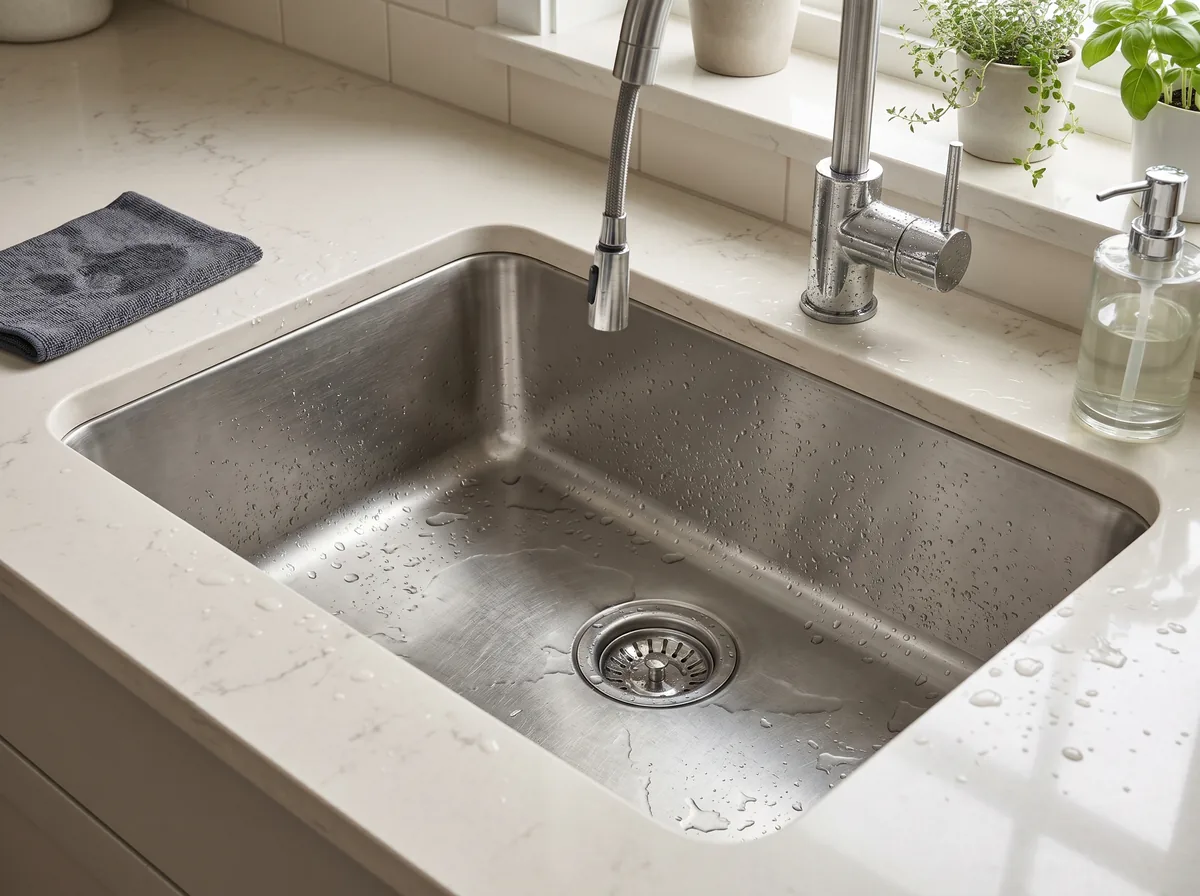
Stainless steel is the most common kitchen sink material for good reason. It resists heat, will not crack if you drop a heavy pot, weighs little, and pairs with almost any style. It is also the easiest material to fit as an undermount because it is light. For most families, a good stainless sink is the sensible, no-regrets choice.
The trade-offs are cosmetic. Stainless shows fine scratches over time (a satin or brushed finish hides them better than a mirror finish) and it reveals water spots and fingerprints, so it needs a quick wipe to look its best. Neither affects how it performs, only how it photographs.
Save your money: spend on gauge, not gimmicks
If your budget is tight, put your dollars into thicker steel and sound-deadening, not into a designer brand name or a fancy faucet ledge. A solid 16 gauge stainless sink with good underside padding will outperform a thin premium-branded basin every single day. The extras you can add later; the steel you live with.
Granite and quartz composite: The modern favourite
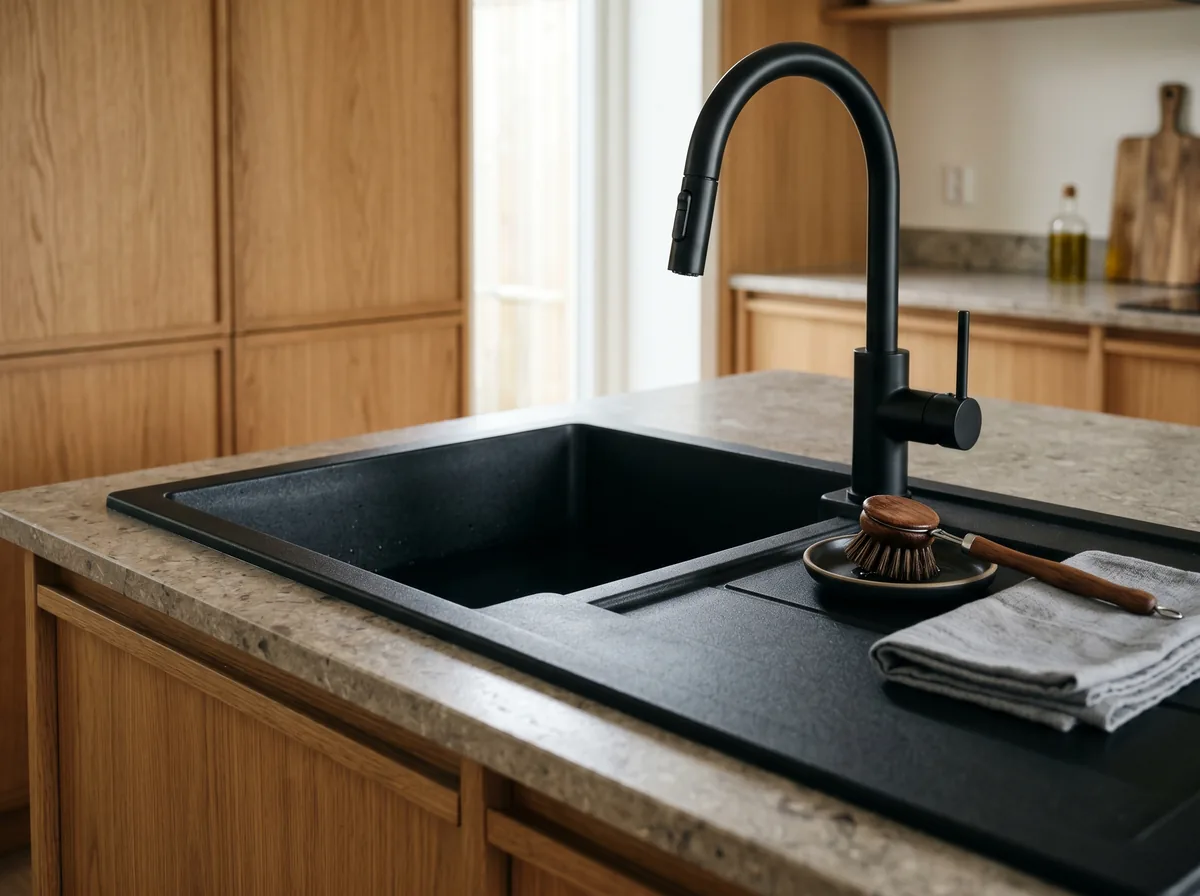
Composite sinks are made from crushed stone bound in resin. Granite composite in particular has become the go-to upgrade in GTA kitchens because it is highly scratch and stain resistant, hides water marks, and comes in matte colours like black and grey that match contemporary cabinets and countertops beautifully.
They are heavier than stainless, so the cabinet and any undermount support need to be up to the job, which is a fitting consideration rather than a flaw. Quality matters here: a reputable composite handles boiling water from a kettle without trouble, while a bargain one can mark if you set a screaming-hot pan straight onto it. As a rule, do not use any sink as a trivet.
Pro tip: match the sink finish to the counter, not the cabinets
A common mistake is choosing the sink to match the cabinet colour, then watching it clash with the counter it actually sits in. Bring a countertop sample with you when you pick the sink. A black composite basin can look stunning in a light quartz counter or disappear into a dark one, and you want to decide that on purpose, not by accident.
Fireclay, cast iron, copper, and solid surface
Beyond the two workhorses sit the character materials. They can be the right call when style leads the decision, as long as you go in knowing the maintenance.
- Fireclay. The classic farmhouse apron-front look. A glazed ceramic surface that is glossy, stain resistant, and easy to clean. It is heavy and can chip if you drop something hard into it, so it suits homeowners who want the look and will treat it kindly.
- Cast iron with enamel. A durable base coated in baked enamel, available in rich colours. Very tough overall, but a sharp impact can chip the enamel, and a cracked coating can rust, so repairs matter.
- Copper. A showpiece. It develops a living patina over time and is naturally antimicrobial, but it reacts to acids and harsh cleaners, so it needs gentle, consistent care to keep its look.
- Solid surface (acrylic). Often moulded as one piece with a matching countertop for a seamless integrated sink. Easy to clean and repairable, though less heat and scratch resistant than stone composites.
How to match a sink to your kitchen
Pricing note: The figures on this page reflect typical market rates in Mississauga and the GTA as of 2026. What you actually pay depends on the product line you choose, your layout, the condition of what is already there, and how much labour the job involves. Always get a written quote and an in-home assessment before committing to a renovation.
Material is half the decision; the rest is how you cook and what you can budget. Here are typical installed price ranges in the GTA to help you plan, followed by a simple way to choose.
| Material | Typical sink price (2026) | Good fit for |
|---|---|---|
| Stainless steel | $200 to $700 | Busy families, rentals, no-fuss kitchens |
| Granite composite | $350 to $900 | Modern kitchens, matte finishes, low maintenance |
| Quartz composite | $450 to $1,100 | High-end contemporary renovations |
| Fireclay farmhouse | $500 to $1,400 | Classic, traditional, and country-style kitchens |
| Cast iron enamel | $350 to $900 | Colour-led designs, durable bases |
| Copper | $700 to $2,500+ | Statement kitchens, rustic and luxury looks |
Prices above are for the sink itself. Installation, the faucet, and any cabinet modification are extra, and they are where unexpected costs creep in, as we cover in our guide to hidden costs of kitchen renovations. Plumbing connections should be done by a licensed plumber, and any change to your drain or water lines may require a permit and inspection depending on the scope.
- If you want the safest all-rounder: a 16 to 18 gauge stainless undermount.
- If you want modern and low maintenance: a quality granite or quartz composite.
- If style leads, and you will maintain it: fireclay, cast iron, or copper.
Sources and further reading
- Kitchen and Bath Reno, in-house renovation experience and 2026 GTA pricing observations.
- The Home Depot, kitchen sink types and materials overview (video, embedded above).
- General manufacturer guidance on stainless steel gauge and composite heat tolerance.
Frequently asked questions
What is the most durable kitchen sink material?
Stainless steel and granite composite are the two most durable choices for everyday use, and which one wins depends on what you are guarding against. Stainless steel will not crack or chip even if you drop a heavy pot, which makes it the toughest against impact. Granite composite resists scratches and stains better and shrugs off daily wear without showing it. Both last for many years in a busy kitchen. For most GTA homeowners the decision comes down to look and feel rather than raw durability, since either material will comfortably outlive the rest of the renovation.
Is granite composite better than stainless steel?
Neither is simply better; they suit different priorities. Granite composite hides water spots and scratches, comes in modern matte colours, and tends to look newer for longer, which is why it has become so popular in contemporary kitchens. Stainless steel is lighter, cheaper, completely heat-proof, and impossible to crack, so it is the more forgiving everyday workhorse. If you want a low-maintenance modern look and have the budget, go composite. If you want maximum toughness and value, go stainless. Both are excellent, and a good fabricator can undermount either one.
Can you put hot pans in a composite sink?
You can run boiling water from a kettle into a quality composite sink without trouble, but you should not set a screaming-hot pan straight from the burner onto any sink surface. Cheaper composites in particular can mark or discolour from direct, intense heat. The safe habit, and one worth keeping for every sink material, is to use a trivet or rack and to run the tap while you rinse very hot cookware. Treat the sink as a basin, not a heat-proof landing pad, and a good composite will look new for years.
What sink material is easiest to keep clean?
Granite composite and fireclay are among the easiest to keep looking clean day to day, because both hide water spots and resist staining, and a quick wipe restores the finish. Stainless steel is also easy to clean but shows fingerprints and water marks more readily, so it needs that wipe more often to look its best. Whichever you choose, an undermount installation helps, since you can sweep crumbs and water straight off the counter into the sink with no rim to catch grime. Avoid harsh abrasive cleaners, which can dull or scratch most finishes.
Does the sink need to match the countertop?
It does not need to match exactly, but it should be chosen with the countertop in mind, because the two sit together and are seen together. A solid countertop such as quartz or granite is what makes a seamless undermount sink possible, so confirm your counter choice first. Then decide whether you want the sink to blend in, by matching tones, or to stand out, by contrasting. Bringing a countertop sample when you shop for the sink is the simplest way to get this right. A designer can help you balance the sink, counter, faucet, and hardware so the whole kitchen feels coordinated.
What to do next
Choosing a kitchen sink is not about finding the single best material. It is about matching the right material to how your household actually uses the kitchen, then pairing it with the right countertop and faucet.
- Shortlist two materials from the comparison table based on how you cook and clean.
- Bring a countertop sample when you choose the sink so the finishes work together.
- Confirm gauge or quality, then plan the faucet and undermount support with your installer.
Download the free quick guide
Take our printable one-page comparison to the showroom so you can shortlist materials with confidence.
Planning a kitchen renovation in Mississauga or the GTA?
From the sink to the cabinets, we build kitchens that work as hard as you do. See our recent kitchen projects, get a feel for how we work on our process page, or learn about our Mississauga kitchen renovations and book a free in-home consultation. Call us at (905) 277-2228.