Short answer first: a floating vanity is usually a great idea for a modern bathroom reno, and it is one of the few upgrades that makes a room feel bigger without changing its footprint. A floating vanity is simply a wall-mounted cabinet with an open gap of floor beneath it instead of legs or a base that touches the ground. If you are planning a refresh, our bathroom renovation team across the GTA installs them week in and week out, and the look almost always lands. The one thing to get right is whether your storage needs and your walls suit it, which is exactly what this guide walks through.
Below you will find what a floating vanity actually is, why homeowners keep asking for them, the honest trade-offs, what the install involves here in the GTA, and how to nail the mounting height. By the end you will know whether to put one on your plan or keep a traditional floor vanity.
In this article
What a floating vanity actually is
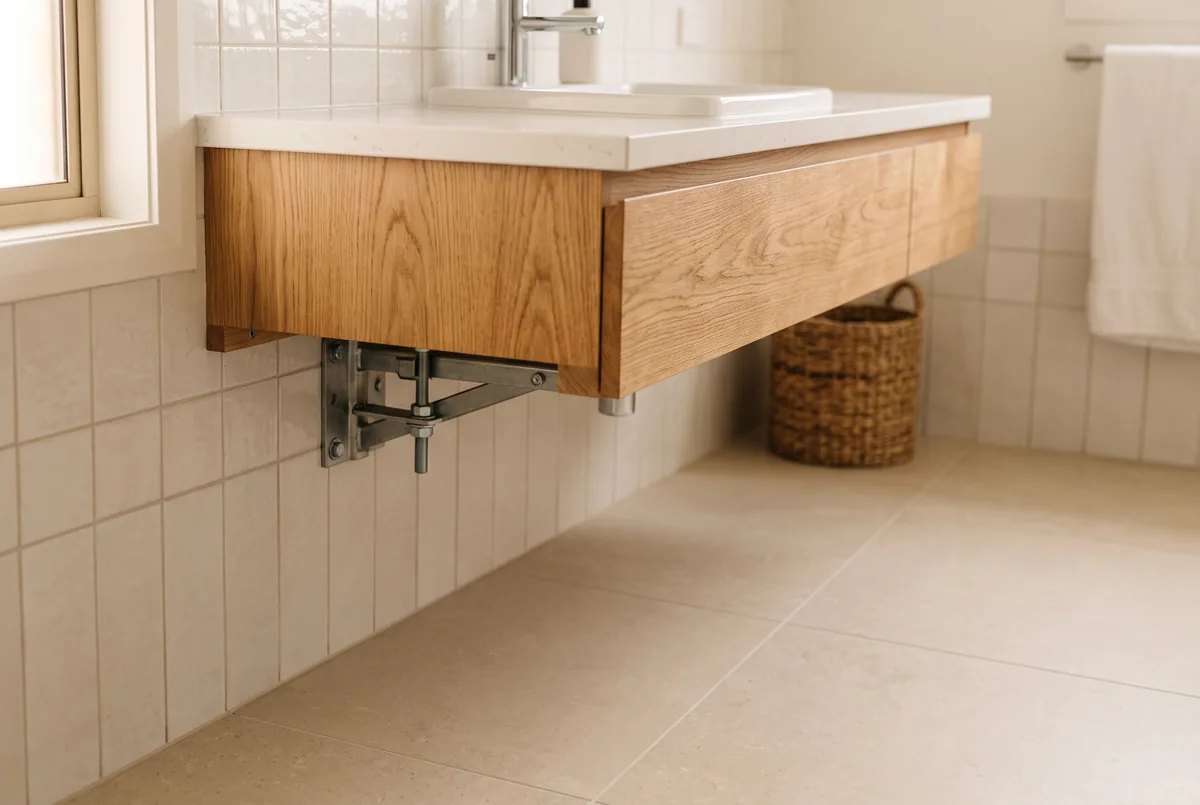
A floating vanity, sometimes called a wall-hung or wall-mounted vanity, is a bathroom cabinet fixed directly to the wall so it appears to hover above the floor. There are no legs and no toe-kick base sitting on the tile. The whole unit is held by heavy-duty brackets or lag bolts that pass through the cabinet back and bite into reinforced framing inside the wall. What you see is a clean cabinet and a strip of open floor running underneath it.
That open strip is the entire point. Because your eye can see the floor continue unbroken from wall to wall, the room reads as larger and calmer than it would with a boxy cabinet planted on the ground. It is the same trick that makes a room with legs-up furniture feel more spacious. Pair it with a countertop, an under-mount or vessel basin, and wall-mounted taps, and you have the signature look of a contemporary bathroom.
Did you know?
The floating look is not just a style choice, it is recognised by the design world as a core move in modern bathrooms. The National Kitchen and Bath Association regularly flags wall-hung vanities among the features that make compact bathrooms feel open, which is why you see them in so many renovation reveals.
Why homeowners love the floating vanity look
When Oakville and Mississauga homeowners point to a photo they love, a floating vanity is often the reason the room feels so polished. Here is what it is doing for them.
It makes the room feel bigger
This is the headline benefit. Keeping the floor visible from wall to wall stretches the space, which matters most in the compact ensuites and powder rooms that fill GTA homes. You get a more open room without moving a single wall.
It is far easier to keep clean
There is no base trapping dust, hair, and water where the cabinet meets the floor. A mop or robot vacuum glides straight underneath, so the grime that collects around a traditional vanity simply has nowhere to hide. In a busy family bathroom that is a real, daily win.
You control the height and the vibe
Because the cabinet is not tied to the floor, you set the height that suits the people using it. That flexibility, combined with the minimalist lines, is why the look feels custom rather than off the shelf.
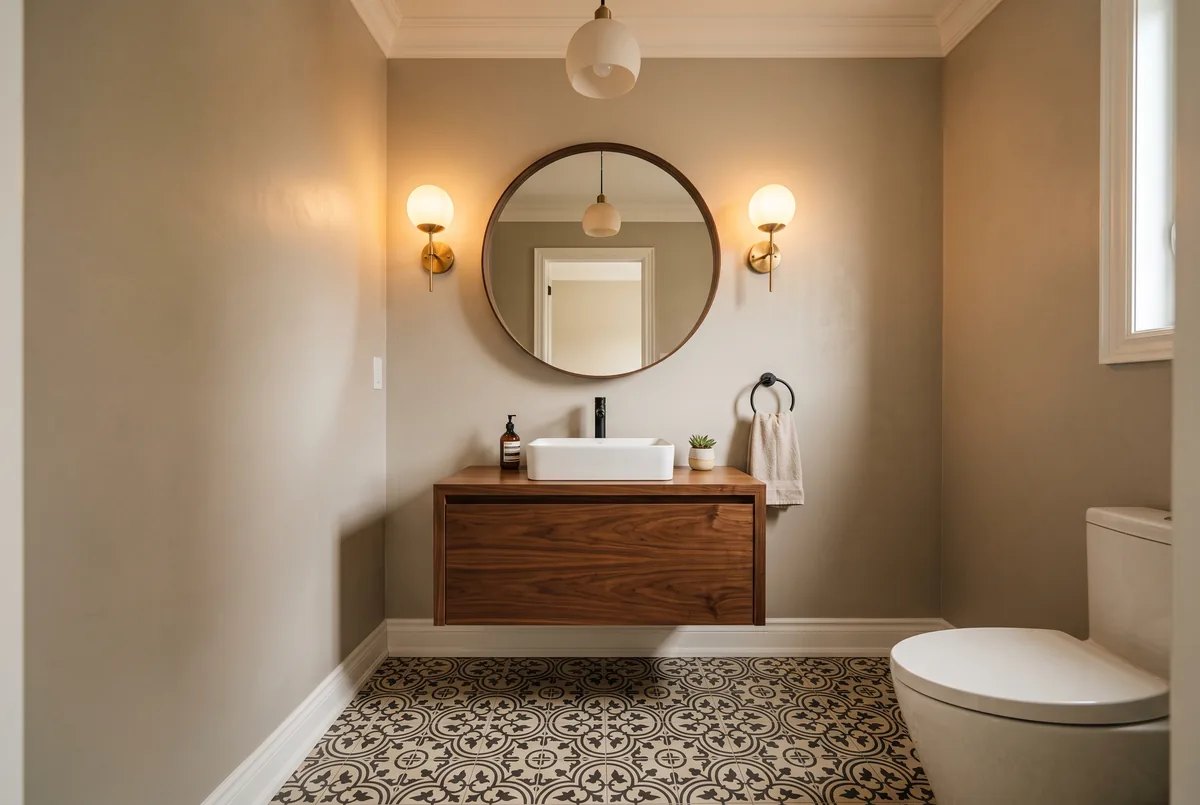
People often ask: does a floating vanity really make a small bathroom look bigger?
Yes, and it is one of the most reliable small-bathroom tricks there is. By keeping the floor line unbroken, a wall-hung vanity removes the visual weight that a floor cabinet plants in the corner. The room does not gain a single square foot, but it reads as noticeably more open, which is why designers reach for it first in tight powder rooms.
The trade-offs to weigh before you commit
A floating vanity is not automatically the right call for every bathroom. Three honest trade-offs decide it.
You give up some storage
Losing the lowest section of the cabinet means a little less room inside. For most homes the gap is smaller than expected, and it is easily recovered with a tall linen tower or a recessed medicine cabinet. But if this is your only bathroom and storage is already tight, weigh that carefully.
Your wall has to be ready for it
The cabinet hangs off the wall, so the wall needs solid wood blocking between the studs to carry the load. In a full renovation that is a quick add while the wall is open. In a lighter refresh where the drywall stays put, it means opening a section of wall first. This is not optional, and it is the number one thing a good renovator will check.
The plumbing wants to be tidy
Because the space under the cabinet is on show, exposed pipes stand out. The cleanest result routes the drain and supply lines into the wall, which takes a bit more plumbing work. You can leave them exposed with a nicer bottle trap, but most homeowners who chose the floating look want it clean.
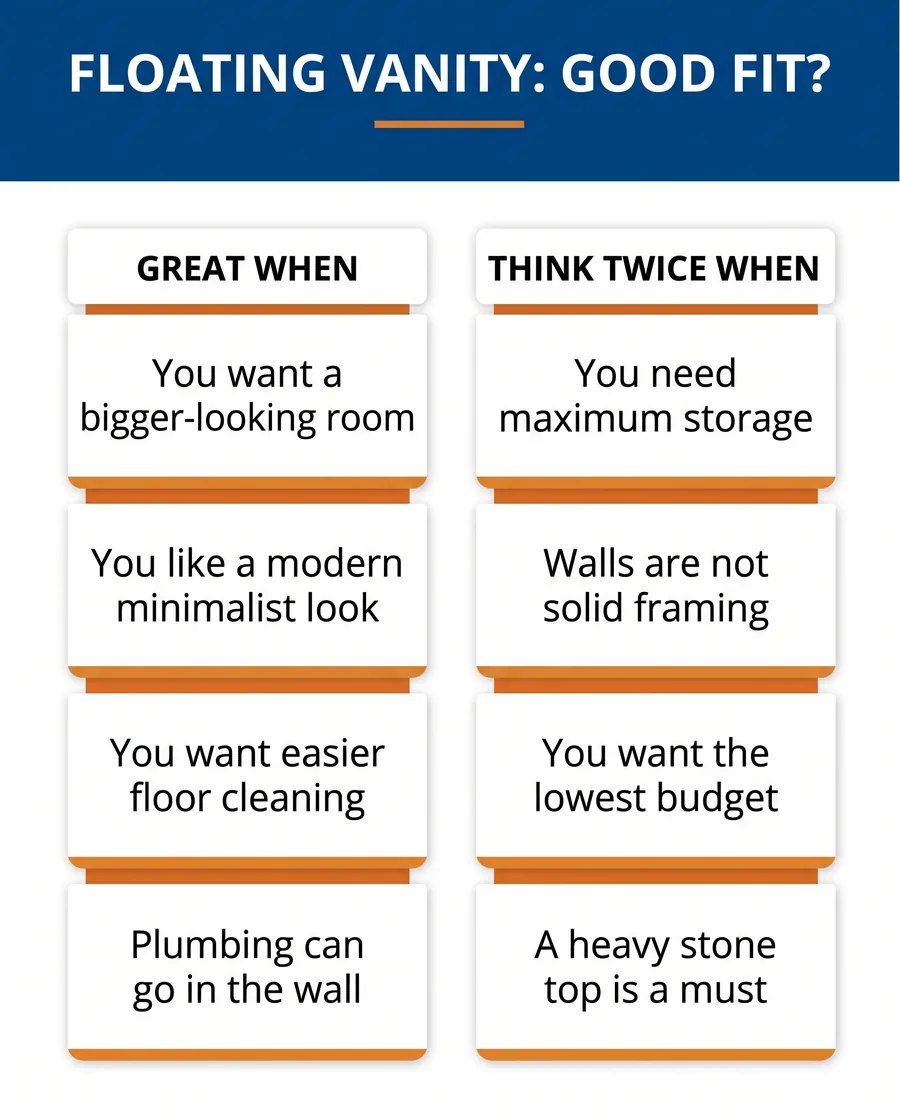
| What you are weighing | Floating vanity | Traditional floor vanity |
|---|---|---|
| Sense of space | Feels bigger, floor stays visible | Grounded, can feel bulkier |
| Storage | Less, no floor-level cabinet | More, full-height cabinet |
| Cleaning the floor | Easy, mop glides underneath | Have to clean around the base |
| Install effort | Needs wall blocking, often in-wall plumbing | Simpler, sits on the floor |
| Best when | You want a modern, open, easy-clean room | Storage and lowest cost come first |
Please note: This article is general design guidance only. Every bathroom has its own wall framing, plumbing rough-in, and moisture conditions. Kitchen and Bath Reno is not liable for outcomes from actions taken based on this content. Before you commit to a wall-hung vanity, have your renovator confirm the wall can carry the load and that the plumbing can be routed to suit.
Save your money
If you love the floating look but your budget is tight, ask your renovator about mounting the vanity on the existing wall with proper blocking and keeping a neat exposed trap rather than moving all the plumbing into the wall. You still get the open-floor effect for less, and you can always tidy the plumbing later.
What it costs and what the install involves in the GTA
Pricing swings with the cabinet, the countertop, and how much plumbing and wall work is involved, so treat this as planning guidance rather than a quote. A modest floating vanity with a laminate or quartz top and standard install sits in the mid range of bathroom cabinetry. Add a stone top, a vessel basin, and in-wall plumbing and it climbs toward the premium end.
The labour side is where a floating vanity differs from a drop-in floor cabinet. Your renovator adds blocking inside the wall, mounts the cabinet dead level, and either conceals or neatly finishes the plumbing. During a full bathroom reno this all happens while the walls are open, so the incremental cost is modest. Any moisture-related work should follow the requirements of the Ontario Building Code, which your licensed contractor will handle as part of the job.
Getting the mounting height right
One of the quiet perks of a floating vanity is that you choose the height instead of accepting whatever the floor cabinet gives you. Set the counter too low and taller users stoop; too high and it feels awkward for kids. Run your household through the quick tool below to land on a comfortable starting range, then let your designer fine-tune for the basin you pick.
Find your comfortable vanity height
A starting range only. Your designer will fine-tune for basin depth and daily use.
Pro tip
Before you fall for a specific vanity, have your renovator confirm two things: that the wall can be blocked to carry the load, and where the drain sits behind it. Sorting those two details early is what separates a floating vanity that looks like the magazine photo from one that fights the plumbing the whole way through the build.
Download the free quick guide
Keep the floating vanity yes-or-no checklist handy while you plan your bathroom reno.
Floating Vanity – Free PDF ChecklistKitchen and Bath Reno designs and installs floating vanities across Oakville, Mississauga, Burlington, Milton, Brampton, and Georgetown. If you want a bathroom that feels bigger, cleans easier, and looks current, we will tell you honestly whether a floating vanity fits your space and how to budget for it. Explore our bathroom renovation services or bathroom renovation in Oakville, then book a free consultation to get started.
Frequently asked questions
Do floating vanities have enough storage for a family bathroom?
They hold less than a full floor cabinet because you lose the lowest section, but the gap is smaller than people expect. A wide floating vanity with deep drawers still swallows toiletries, towels, and a hair dryer with room to spare. Where storage is tight, the trick is to go up rather than down: pair the vanity with a recessed medicine cabinet, a tall linen tower, or a mirrored wall cabinet. In a busy family bathroom in Oakville, that combination usually beats a bulky floor vanity for both capacity and looks.
How much weight can a floating vanity hold, and can it take a stone top?
A properly installed floating vanity can easily carry a natural stone or quartz countertop plus a basin and everyday use. The strength does not come from the cabinet, it comes from solid wood blocking added inside the wall and lag bolts driven into the framing. When that blocking is done right, the unit is rock solid and rated for well over the weight of a person leaning on it. The failures you hear about almost always trace back to a vanity screwed into drywall alone, which is why this is not a job to shortcut.
Are floating vanities more expensive to install than regular ones?
The vanity itself often costs about the same, but the install can run a little higher. Two things drive that. First, the wall usually needs blocking added, which means opening the wall or planning it during a stud-up renovation. Second, the plumbing looks cleanest when the drain and supply lines are moved into the wall rather than left exposed underneath. Neither is a huge job during a full bathroom reno, but they are worth budgeting for so the finished look matches the photos that sold you on the idea.
Do floating vanities work in small bathrooms and powder rooms?
This is where they shine. A small powder room feels cramped the moment a heavy cabinet lands on the floor. Lift that cabinet off the ground and the eye reads the full floor, so the whole room feels larger even though the footprint has not changed. The continuous tile running underneath adds to the effect. For compact Oakville and Mississauga powder rooms, a slim floating vanity is one of the easiest ways to make a tight space feel considered and open.
What height should a floating vanity be mounted at?
Standard comfort height puts the countertop around 34 to 36 inches off the floor, a little higher than older 32 inch vanities. The beauty of a wall-hung unit is that you get to choose, so a taller household can set it higher and a bathroom used by young kids can go lower. Leave roughly 8 to 12 inches of open space beneath the cabinet, which is enough to make the room feel airy and let a mop pass under. Use the calculator above for a starting range, then let your designer fine-tune it.