Ask anyone who has renovated a kitchen or bathroom in a Toronto condo what caught them off guard, and most people say the same thing: the first call was not to a contractor, it was to the condo office. Condo renovation rules Toronto owners run into are not one province-wide checklist. Each condo corporation writes its own approval process, insurance requirements, and construction hours into its own governing documents, and skipping that step is the most common reason a project stalls before it even starts. This guide walks through the general path our home renovation team sees most often across GTA condo buildings, from the first conversation with your board to the final walkthrough.
Nothing here should be read as your building’s specific requirement. Every condo corporation is different. Treat this as a map of the stops along the way, roughly in the order most Toronto condo owners run into them, before you assume your project follows your neighbour’s timeline.
In This Article
A quick note before you keep reading: This article is general information, not legal or professional advice. Condo renovation rules, approval steps, fees, and timelines vary by building and change over time. Confirm the process that applies to your unit with your condo corporation, property manager, and a licensed contractor before you plan or budget a project.
Condo Renovation Rules Toronto Owners Face Before the Contractor Arrives
A condo unit is not quite the same as a house. You own the interior finishes and fixtures, but the building, common elements, and often the plumbing stacks behind your walls belong to the corporation. That distinction is why condo renovation rules Toronto owners deal with exist at all, sitting on top of any city permit requirement rather than replacing it. Your condo corporation is a legal entity governed by its own declaration, bylaws, and rules, along with Ontario’s Condominium Act, 1998.
In practice, your board or property manager gets a say in your kitchen and bathroom revamp before a single tile comes up, even for work that would need no permit in a detached house. The Condominium Authority of Ontario is a genuinely useful stop before you talk to anyone else.
Did You Know?
Some homeowners search for “strata approval for renovations,” a term used for condo-style ownership in British Columbia and a few other provinces. Ontario’s version is a condominium corporation, governed by the Condominium Act, 1998, not a strata corporation. The underlying idea, board approval before you touch a shared building, carries across provinces even though the terms and specific rules do not.
Before You Start: What to Gather First
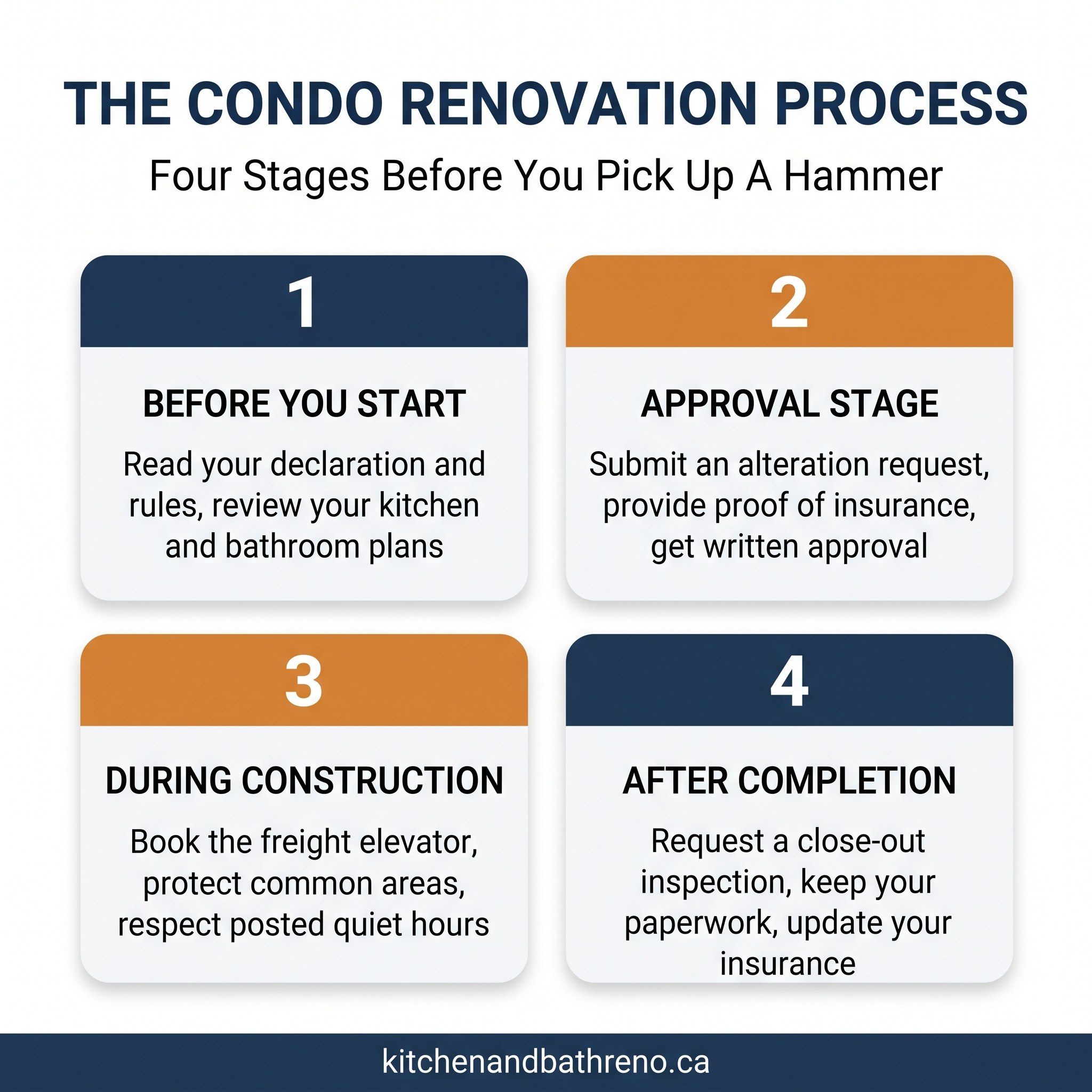
Before you request a single quote, pull your own paperwork. Every unit owner gets a copy of the declaration, bylaws, and rules at purchase, and most corporations keep updated versions with the property manager or on an owner portal. Read the sections on alterations and unit modifications specifically. Some buildings restrict flooring types for sound reasons, some set a waterproofing standard for bathroom work, and some simply ask for notice. You will not know which apply to you until you read your own documents, not a friend’s building.
Next, put together a rough scope: what is changing in the kitchen, what is changing in the bathroom, whether plumbing or electrical is moving, and roughly how long the work will take. You do not need finished drawings yet, just enough detail for the property manager to tell you honestly what your building will ask for next.
The Approval Stage
This is the part people find slowest, and it is worth planning around rather than fighting. Most condo corporations ask an owner to submit a written alteration or renovation request before work begins, describing the scope, the contractor, and the expected timeline. Many also ask for proof of insurance, and it is common for a certificate to name the corporation as an additional insured. Whether that applies to you is a question for your property manager, not a guess.
Some buildings also keep a list of contractor requirements, such as proof of a trade license for plumbing and electrical work, or a minimum liability coverage amount. Ask for that list early so it does not surprise your contractor mid-quote. Approval timelines vary widely by building and by how complete your submission is, so ask your property manager directly what a realistic timeline looks like for your project.
Pro Tip
Get the approval in writing before any work starts, not just a verbal yes from the property manager. If a question comes up mid-project, a written alteration agreement is what your contractor and your board will both point back to.
During Construction
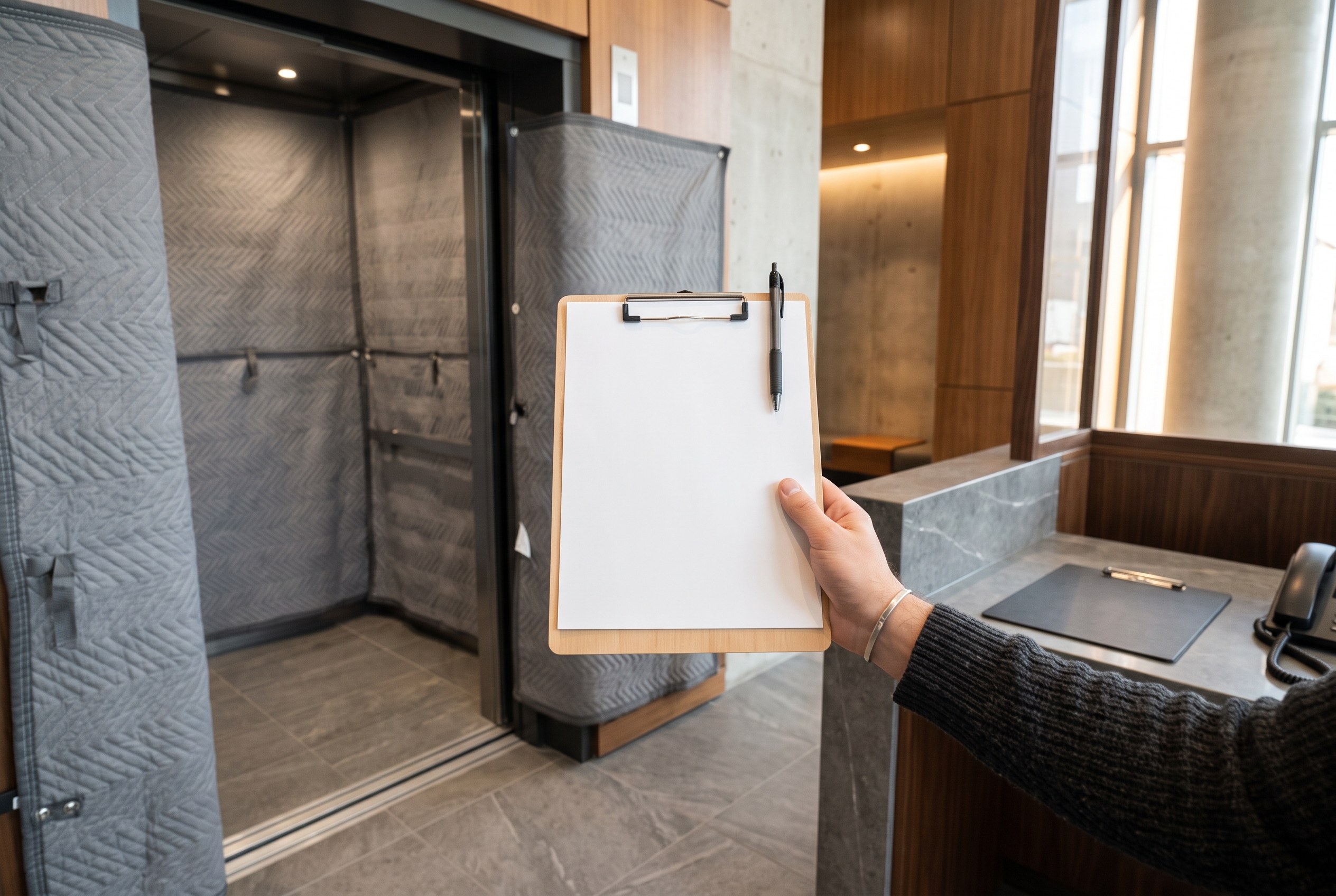
Once work is approved, the building’s day-to-day rules take over. Most condos require freight elevator bookings for moving materials in and out, often restricted to specific windows so they do not collide with move days or deliveries. Quiet hours are common too, though the actual hours differ by building, so check your rules rather than assume a standard schedule.
Your contractor should also be protecting common areas as a matter of course: hallway floors, elevator walls, and stairwells covered before materials move through them. This is a reasonable thing to ask about during your first walkthrough with a contractor, not something to discover halfway through the job.
After Completion
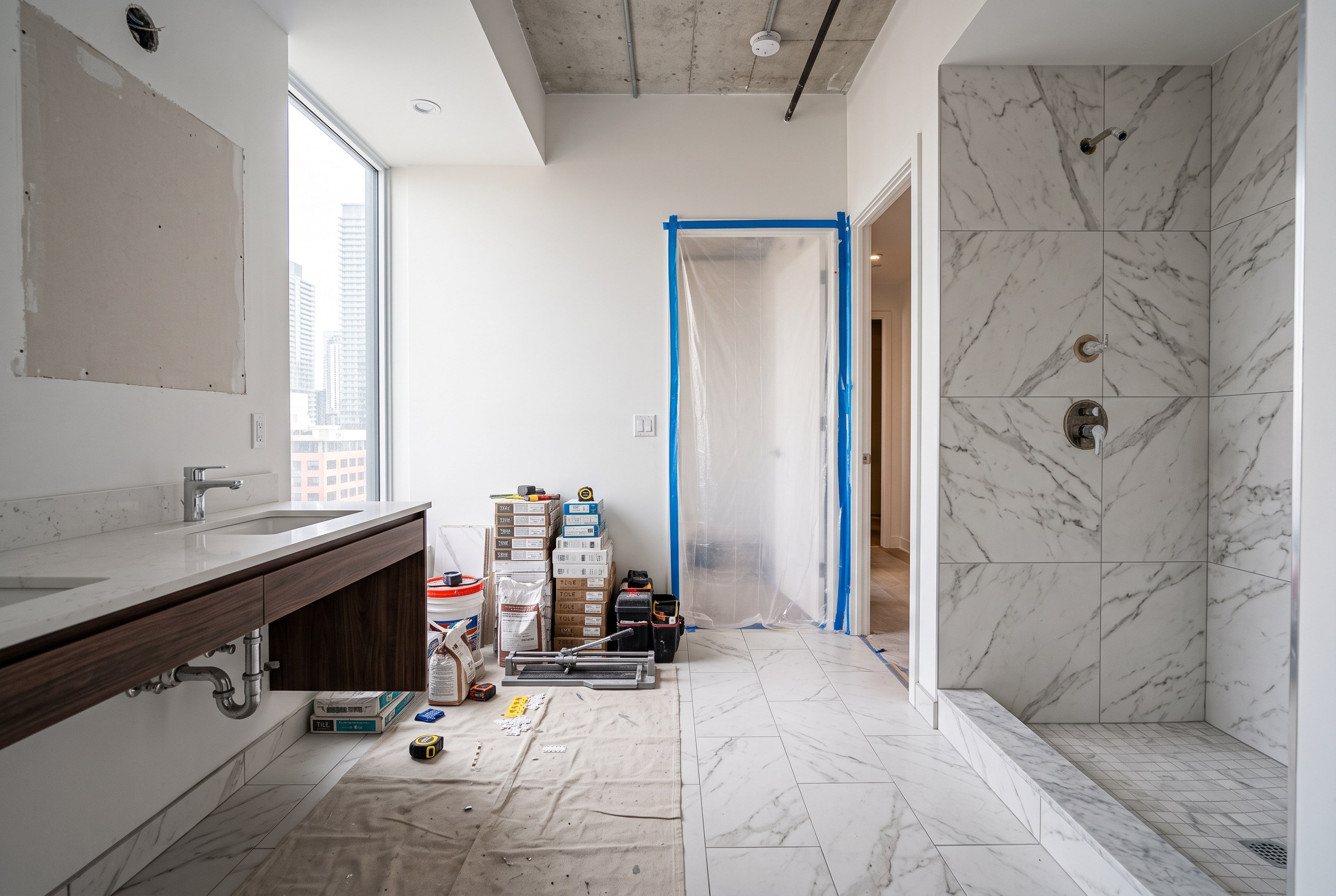
Some corporations ask for a close-out check once the work is finished, particularly if plumbing or electrical was involved. Even where it is not required, it is worth walking through the unit with your contractor and confirming everything matches what was approved. Keep your paperwork, the alteration agreement, contractor invoices, and any inspection records. It is genuinely useful the next time you sell the unit or file an insurance claim.
It is also worth telling your own insurance provider about the renovation once it is done, since upgraded finishes can change what your unit is worth to insure. That conversation belongs with your insurer, not a general guide.
Kitchen and Bathroom Specific Considerations
Kitchen and bathroom work carries a couple of condo-specific wrinkles a house renovation does not. Bathrooms sit above someone else’s ceiling, so plumbing changes, new tile, or a moved drain can affect the unit below if the waterproofing or a shared stack is disturbed. That is exactly why many corporations ask about plumbing scope in the alteration request. A plumber who has worked in condo buildings before will know to flag that kind of change early, so ask about that experience directly when comparing contractors for a bathroom renovation service.
Flooring is the other one. Many condo declarations include a sound transmission or underlay requirement for hard flooring, which can affect a kitchen renovation if you are moving from carpet to tile or hardwood. This detail lives in your building’s specific rules rather than any general standard, so put it on the list of questions for your property manager rather than assuming it matches a friend’s building.
Save Your Money
A single conversation with your property manager before you sign a contract is the cheapest step in the whole process. Finding out about a flooring underlay rule or an insurance requirement after materials are ordered is a much more expensive way to learn the same information.
What to Bring to Your Condo Board Meeting
If your building requires you to present your project to the board or submit a formal request, showing up prepared makes the whole process faster. Here is a general starting list.
| Item | Why It Matters |
|---|---|
| A copy of your declaration, bylaws, and rules | Confirms what your specific corporation actually requires, not a general assumption |
| A written scope of work | Gives the board or manager something concrete to review instead of a verbal description |
| Proof of insurance, if requested | Often required before an alteration agreement is signed |
| Contractor contact and licensing information | Some corporations keep this on file before work begins |
| Any plumbing or structural changes, flagged clearly | These tend to get closer review than cosmetic updates |
| A rough construction timeline | Helps the board coordinate elevator bookings and notify neighbours |
Free Condo Renovation Questions Checklist
Questions to ask your condo corporation, your contractor, and yourself before you sign a contract.
People Often Ask
The video above, from the Condominium Authority of Ontario, covers who is generally responsible for repairs to different parts of a condo unit. It is a useful starting point for the same ownership boundaries that shape renovation approval, though your own declaration is still the final word.
Kitchen and Bath Reno works with condo owners across the GTA on bathroom renovation and kitchen upgrade projects, the same team that handles renovations across Mississauga and Toronto condo buildings. A free consultation can include a general conversation about the condo renovation rules Toronto boards tend to apply, alongside the design and budget questions.
Frequently Asked Questions
Sources and References
- Government of Ontario, Condominium Act, 1998
- Condominium Authority of Ontario, general condo owner resources
- Condominium Authority of Ontario, resource library
- Condominium Authority Tribunal, dispute resolution information
- City of Toronto, building permits information
- Canada Mortgage and Housing Corporation, housing research reports
Before You Call a Contractor
Pull your declaration, bylaws, and rules. Ask your property manager what your building’s alteration process actually looks like. Then come to us with a rough scope, and we will help you plan a kitchen or bathroom renovation that works with the condo renovation rules that Toronto buildings actually apply.
Book a Free Consultation