Standing in a cabinet showroom with two doors in front of you, one flat and soft-looking, one that throws back the ceiling lights like a mirror, most people ask the same question: matte vs glossy kitchen cabinets, which one am I going to be happy with in five years, not just on install day? If you are already deep into planning a kitchen renovation, the finish decision tends to sneak up on you after the layout and the countertop are settled, and it is worth more thought than it usually gets.
Here is the honest comparison, without a hard sell toward either one, so you can pick the finish that fits how your kitchen actually gets used.
What actually separates matte from glossy kitchen cabinets
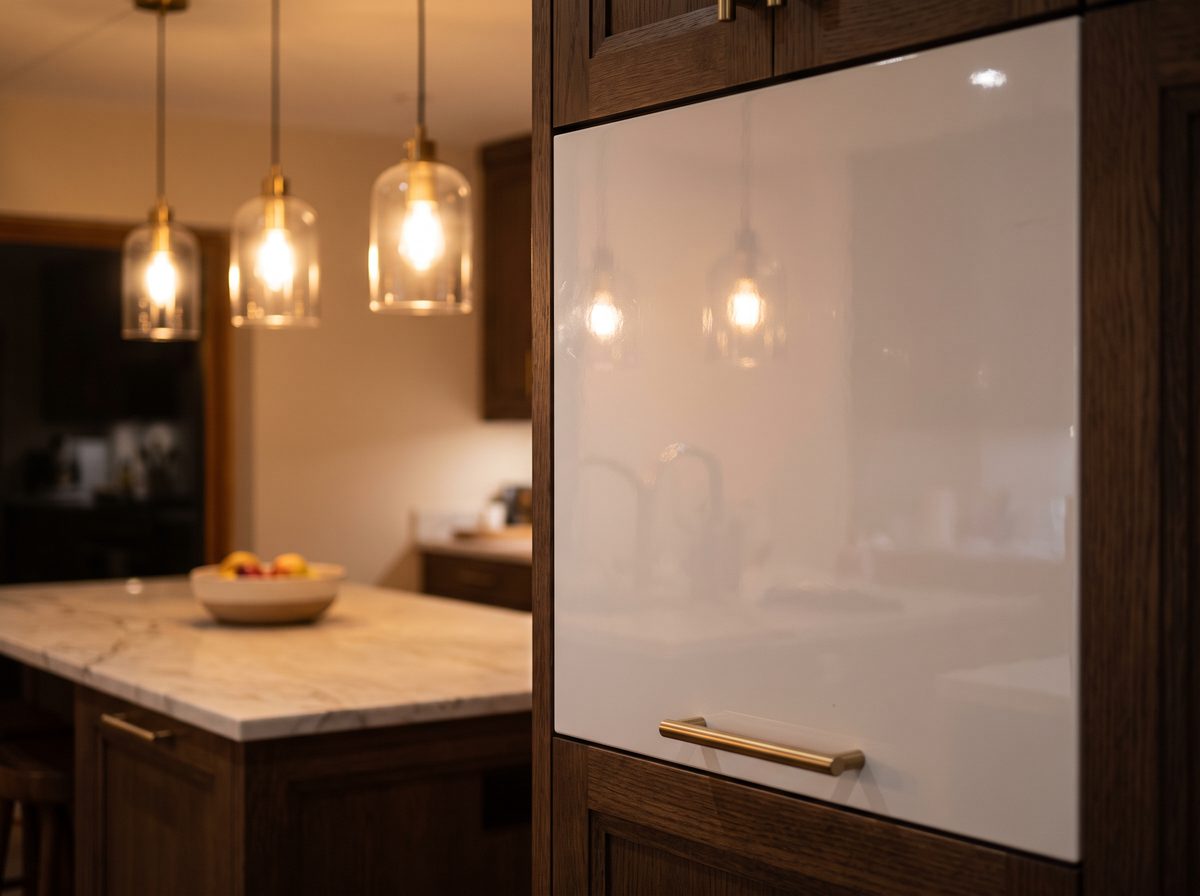
The difference sits in how much light the door bounces back. A glossy finish is built to reflect: light hits the surface and leaves almost as sharp as it arrived, which is why a glossy door reads as deeper and glassier than the same colour in matte. A matte finish scatters that light instead of returning it, so the surface looks softer and flatter, and the colour underneath reads truer without a glare washing it out.
That single property, how the surface handles light, is what drives almost every practical difference people notice once the cabinets are actually installed and lived with.
Quick Take
Neither finish is objectively better. Matte tends to hide everyday smudges and forgive an imperfect wall of light. Glossy tends to make a small or dim kitchen feel brighter and bigger. The right call depends on your room, not on a trend.
The case for a matte finish
Matte kitchen cabinets have had a long run in Mississauga and Oakville renovations for a simple reason: they are forgiving. Fingerprints, water spots and light dust tend to sit less visibly on a matte surface than on a glossy one, which matters most on island cabinets and lower doors that get touched constantly. Matte also pairs comfortably with a wider range of hardware and countertop tones, since there is no reflection competing with the rest of the room for attention.
The tradeoff is depth. A matte surface will not throw light around a windowless galley kitchen the way a glossy one can, and on a budget-grade door the flat finish can occasionally read as plain rather than intentional if the colour and hardware are not chosen carefully.
The case for a glossy finish
Glossy kitchen cabinets earn their place in compact condo kitchens and open concept spaces where bouncing light matters. The reflective surface can make a narrow galley kitchen or a kitchen with one small window feel noticeably more open, and a glossy white or pale grey door tends to photograph and show beautifully against a stone or quartz counter.
The tradeoff runs the other way from matte. A glossy surface shows fingerprints, water spots and light scratches more readily, particularly in strong direct sunlight, which means a bit more wiping down if the kitchen sees heavy daily traffic from kids or pets.
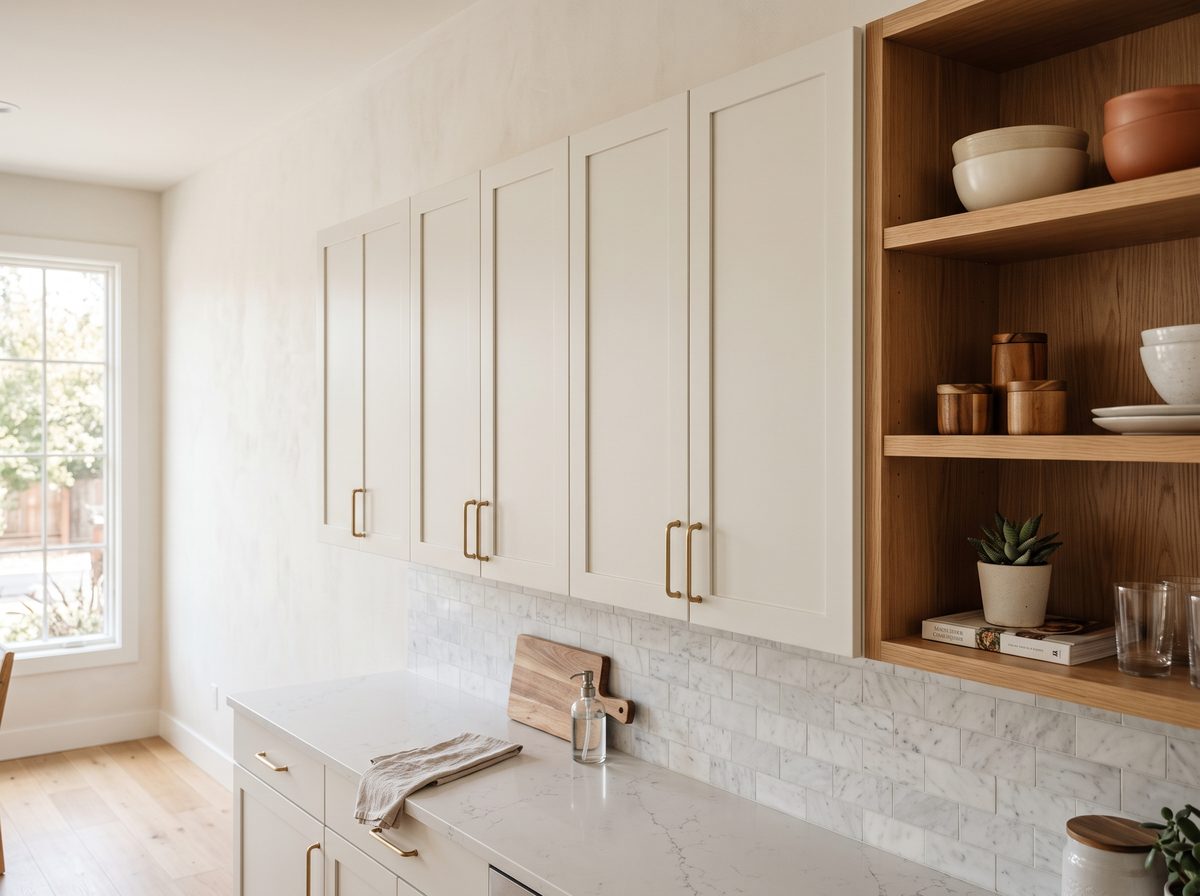
Matte vs glossy kitchen cabinets
Put the two finishes next to each other on the points that actually change day-to-day life in the kitchen, and the choice gets easier to reason through.
| What matters | Matte finish | Glossy finish |
|---|---|---|
| Fingerprints and smudges | Generally less visible day-to-day | Shows up more readily, especially near handles |
| Light in a dim or narrow kitchen | Absorbs light rather than bouncing it | Reflects light, can make a small room feel bigger |
| Scratches and wear over time | Tends to blend into the surface texture | Can catch the eye more under direct light |
| Everyday cleaning routine | A quick wipe usually keeps it looking even | Streaks show more, so cleaning is a bit more frequent |
| Common pairing | Warm woods, matte hardware, earthy palettes | Stone or quartz counters, polished or brushed hardware |
People Often Ask
Will a glossy finish make my whole kitchen look bigger? It helps with the sense of light and depth, but layout, window placement, and colour choice do more of that work than the finish alone. Treat gloss as one tool in the room, not a fix for a layout problem.
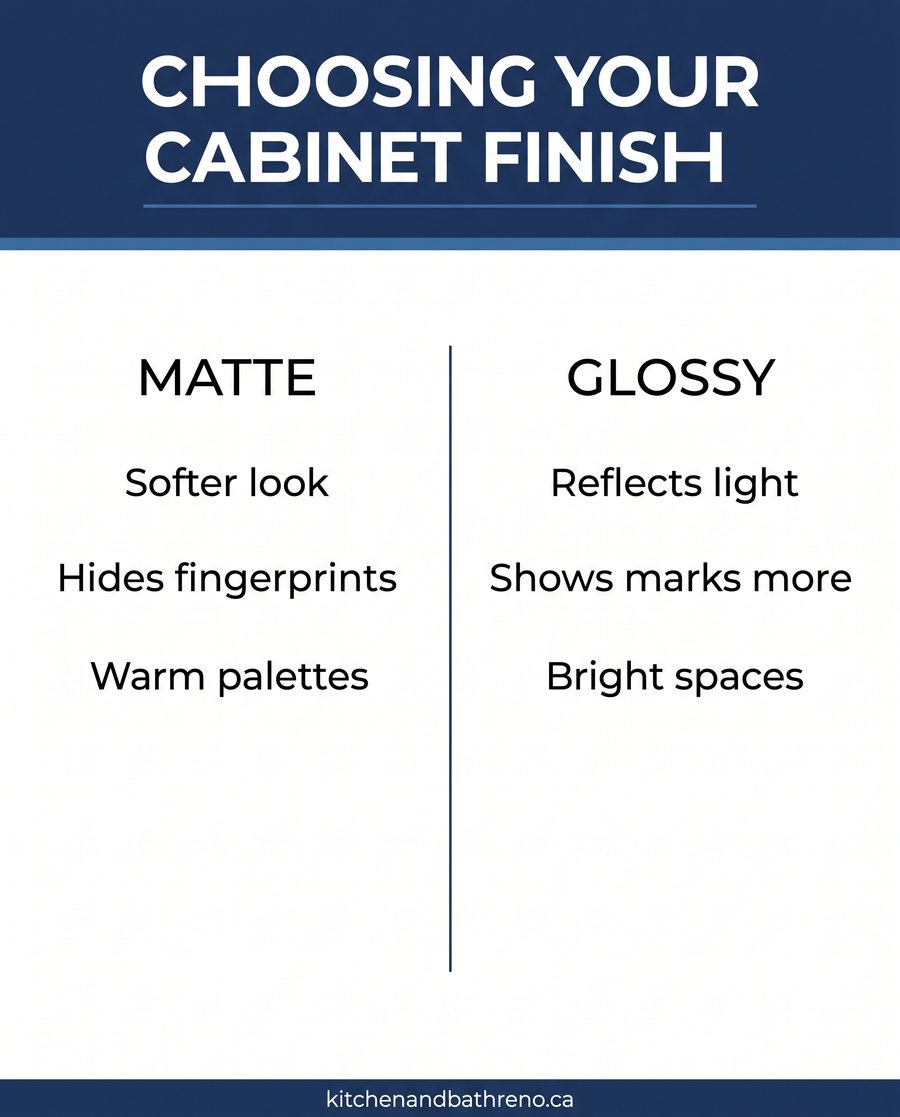
Which one fits your kitchen
A rough way to sort it: if your kitchen gets touched constantly, faces north with limited direct light and leans toward a warm, lived-in palette, matte kitchen cabinets usually feel like the lower-maintenance choice. If your kitchen is compact, bright, or built around a sleek all-white or pale palette, glossy cabinets can add a sense of polish that a flat finish will not match.
Plenty of Burlington and Milton kitchens split the difference: matte lower cabinets that take the daily traffic, with a glossy island or upper run for contrast and light. If you are weighing a full cabinet change against a lighter update, our comparison of refacing against a full cabinet replacement walks through what each route actually involves.
Living with the finish day to day
Whichever finish you land on, cleaning products matter more than most people expect. Harsh degreasers and abrasive pads can dull a glossy surface or leave streaking on matte over time, so it is worth checking the care instructions that come with your specific cabinet line rather than reaching for whatever is under the sink. Manufacturers vary in what they recommend, and the Kitchen Cabinet Manufacturers Association publishes general cabinet care guidance that is a reasonable starting point before you settle on a routine.
If you want to see both finishes in person before deciding, our matte cabinet finish gallery and our glossy cabinet finish gallery both show real installed kitchens, which tends to make the call easier than any swatch ever does.
Good to know
Cabinet finishes wear differently depending on daily use, sunlight exposure, cleaning products and the specific line you choose. This article is general guidance, not a spec sheet for your kitchen. Check the manufacturer’s care instructions for the exact door you select, and ask us about durability for your household before you commit to a finish.
Download the free quick guide
A printable worksheet to walk through light, traffic, and cleaning habits before you choose between matte and glossy kitchen cabinets.
Frequently Asked Questions
Is a matte or glossy finish easier to keep clean in a busy kitchen?
For most households, matte kitchen cabinets are the lower-fuss choice day-to-day, because fingerprints and light water spots tend to blend into the flat surface rather than standing out. Glossy cabinets are not hard to clean, but the reflective surface shows smudges and streaks more readily, especially near handles and on lower doors where kids and pets make contact. If your kitchen sees constant traffic and you would rather wipe less often, matte is generally the more forgiving pick, though the right cleaning products matter for either finish.
Do glossy kitchen cabinets show scratches more than matte ones?
Often, yes, particularly under direct sunlight or strong overhead lighting, because a glossy surface reflects light along a scratch the same way it reflects everything else, which makes a mark more visible than it would be on a flatter finish. Matte tends to blend small marks into its texture instead of highlighting them. Neither finish is scratch-proof, and how a specific door line holds up depends on the material and coating, so it is worth asking about durability for the exact cabinet you are considering.
Can I mix matte and glossy cabinets in the same kitchen?
Yes, and it is a common way to get the benefits of both. A typical approach in Burlington and Milton kitchens we work on is matte lower cabinets, which take most of the daily handling, paired with a glossy island or a run of upper cabinets for contrast and extra light. The combination works best when the two finishes share a colour family or a deliberate contrast, rather than being chosen independently, so it is worth planning both together rather than adding gloss as an afterthought.
Which finish works better in a kitchen with little natural light?
Glossy kitchen cabinets generally do more for a dim or narrow kitchen, since the reflective surface bounces available light around the room instead of absorbing it the way matte does. A glossy finish will not replace a missing window or add fixtures, but paired with lighter colours and good task lighting it can make a small, dark galley kitchen feel noticeably more open. In a kitchen that already gets plenty of natural light, the difference between the two finishes matters far less.
Does a matte finish cost more than a glossy one?
Pricing varies by manufacturer, door material, and the specific product line, so there is no reliable general answer, and cost is not usually the deciding factor between the two finishes anyway. The bigger differences are in daily maintenance and how each finish reads in your specific room. If budget is part of your decision, the most accurate way to compare is to get a written quote on both finishes for the exact doors you are considering rather than relying on a general price range.
The verdict on matte vs glossy kitchen cabinets is not really about which finish wins. It is about which one disappears into your routine instead of fighting it. Bright, compact, and fingerprint-tolerant households tend to land on gloss. Busy, warm-toned kitchens that see constant hands on the doors tend to land on matte. Either way, seeing full-size doors under your own kitchen lighting beats guessing from a small sample.
Our design team works with homeowners across Mississauga, Oakville, and Burlington on exactly this kind of decision every week. Book a design consultation at our showroom and bring a photo of your kitchen. We will hold both finishes up under your actual light before you order anything.