Matte black vs brushed brass fixtures: it is the single most common finish question we hear from Mississauga and Oakville clients standing in front of a faucet wall during a kitchen upgrade, and the honest answer is that neither one is objectively winning the trend race. Both have staying power for different reasons, and both fail differently if the wrong finish lands in the wrong household.
Quick take
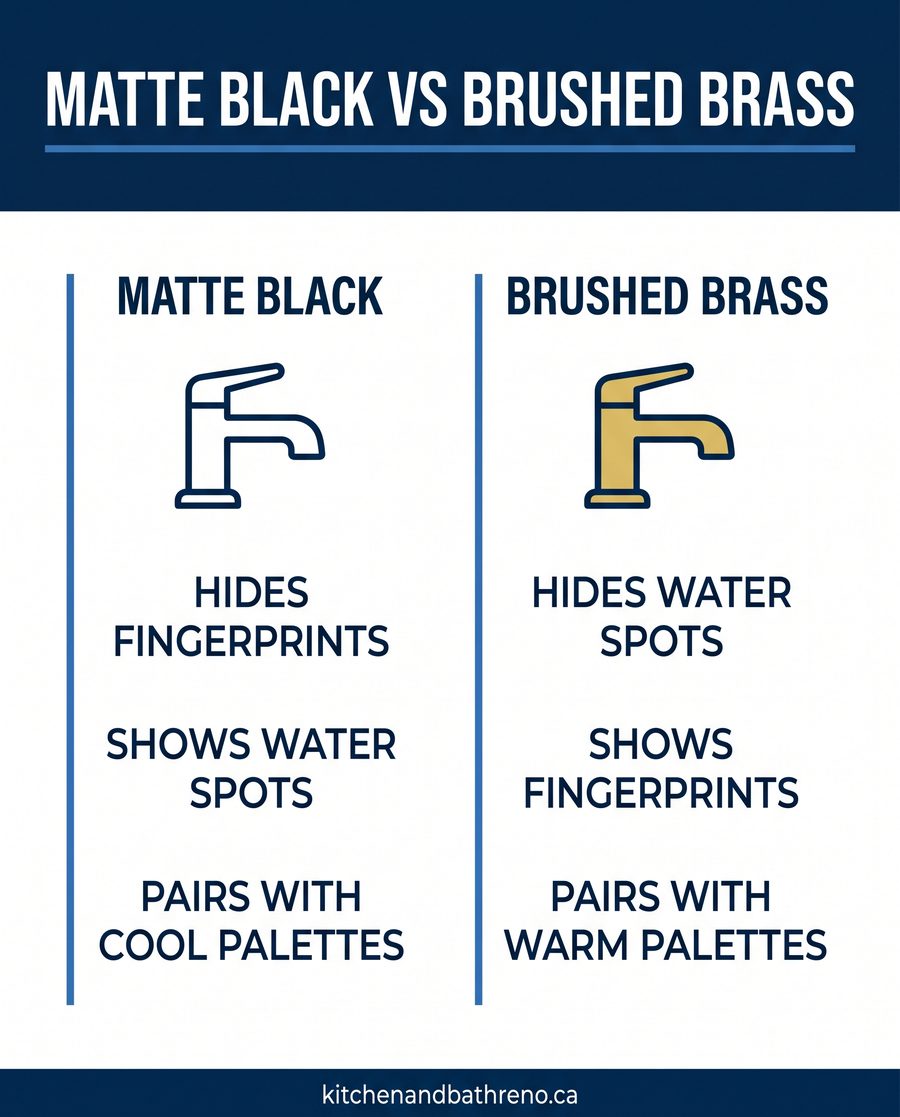
Matte black hides fingerprints and shows hard water spots. Brushed brass hides hard water spots and shows fingerprints. Which trade-off bothers your household more is a better deciding question than which finish is more fashionable right now.
How each finish actually performs day to day
Before talking trend longevity, it is worth separating the two questions that actually matter for daily life: how visible fingerprints and water spots are on each finish, and how well each one holds up to cleaning over years of use. Manufacturer finish technology pages, like Delta Faucet Canada’s describe layered, baked-on physical vapour deposition coatings on their better fixtures, which resist scratching and fading far better than an older-style painted or plated finish. That kind of finish durability applies to both matte black and brushed brass on a comparable fixture tier, so the finish itself is rarely the weak point; the specific fixture line and price tier usually matters more than the colour.
Hard water is the variable most households underestimate. If your area has notably hard water, ask your municipal water utility for a general hardness reading before you commit, since it changes which finish will show more visible mineral spotting between cleanings. Bring a hard water reading and your cleaning habits to the matte black vs brushed brass fixtures conversation with your designer, not just a photo you liked.
Matte black in practice
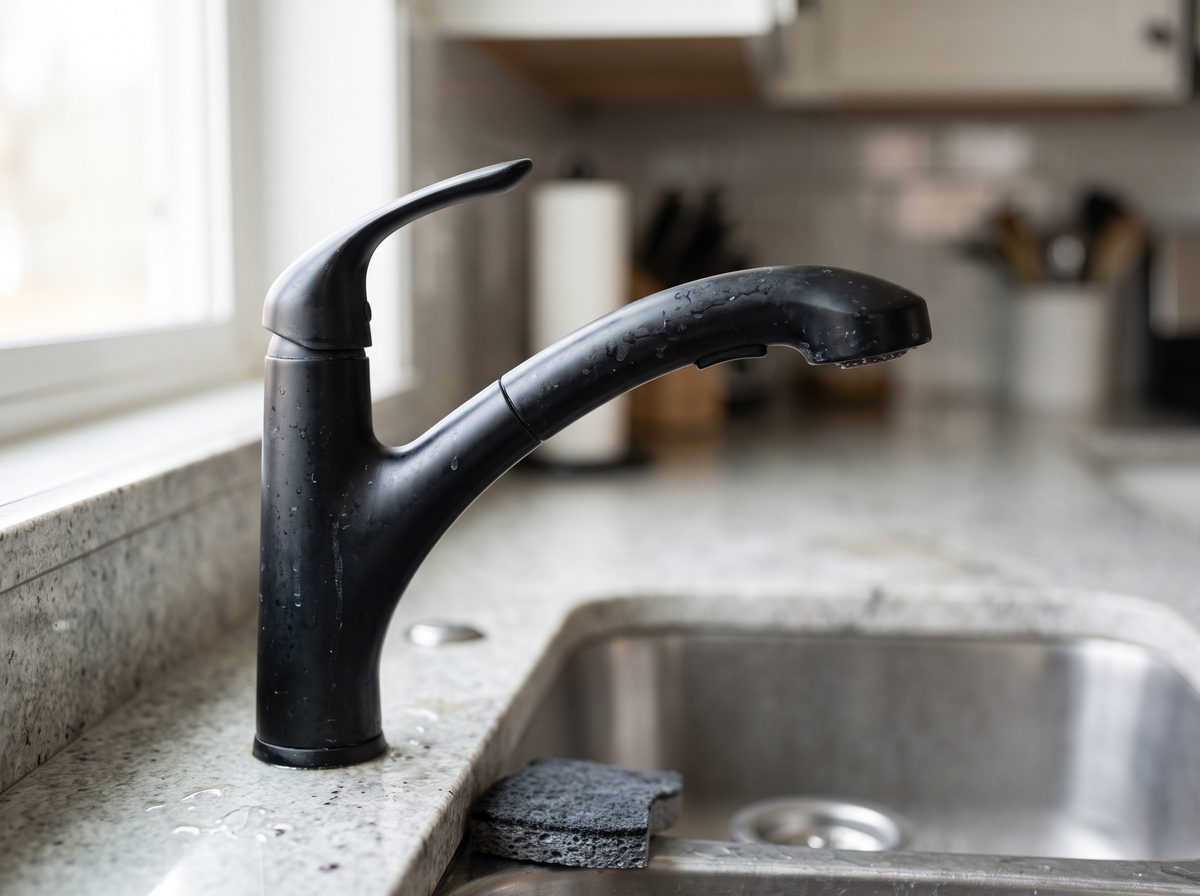
Matte black reads as modern and a little architectural, and it pairs cleanly with almost any cabinet colour, which is a big part of why it has held on as a top choice for several years running rather than fading fast like a shorter-lived trend. The trade-off is visibility: matte black shows hard water spots and soap residue more readily than a lighter or more reflective finish, so it asks for a quick wipe-down more often to stay looking crisp. It handles fingerprints well, since the matte texture diffuses light rather than reflecting an obvious smudge.
People often ask
Does matte black show scratches more than other finishes? Not inherently. A quality matte black coating resists scratching similarly to other finish types at the same fixture tier. What changes is visibility: a scratch through a dark matte coating can reveal a lighter base metal underneath, which shows up more obviously than the same scratch would on a lighter finish.
Brushed brass in practice
Brushed brass brings warmth into a room in a way matte black cannot, which is why it tends to show up in kitchens and bathrooms renos leaning into a warmer, more traditional or transitional palette. The brushed texture is genuinely useful here: it scatters light enough to hide fingerprints and light hard water spotting far better than a polished brass finish would, while still reading as intentionally warm rather than dated.
The trade-off flips relative to matte black: brushed brass shows fingerprints and general handling more than water spots. In a high-traffic kitchen with several hands on the faucet daily, that can mean more frequent wiping than a household expected going in.
Matte black vs brushed brass fixtures, side by side
| What matters | Matte black | Brushed brass |
|---|---|---|
| Hides fingerprints | Yes, diffuses light well | Less well, shows handling |
| Hides hard water spots | Less well, shows mineral spotting | Yes, brushed texture masks it |
| Pairs with cool palettes | Very well | Less naturally |
| Pairs with warm palettes | Less naturally | Very well |
| Cleaning habit needed | Wipe down water spots regularly | Wipe down handling marks regularly |
| Typical style direction | Modern, architectural | Transitional, warm traditional |
Neither column is the wrong answer. The finish that fits your household is the one whose weaker point you are least bothered wiping down.
Mixing finishes without it looking accidental
You do not have to choose only one. A common approach we design around is picking a dominant finish for plumbing fixtures, faucets, and the shower system, then using the second finish deliberately for cabinet or drawer hardware, lighting, or a single accent piece like a towel bar. The key word is deliberately: one dominant finish and one clearly secondary finish reads as a considered design choice, while three or four different metal tones scattered through a kitchen or bathroom tend to read as accidental rather than intentional.
If you are also weighing cabinet hardware alongside your fixture finish, our guide to choosing kitchen cabinet hardware covers the same durability and pairing logic from the hardware side.
Good to know
This article offers general guidance on comparing matte black and brushed brass fixture finishes. Individual product durability varies by manufacturer, fixture line, and price tier, and local water hardness varies by municipality. Confirm specific finish warranties with the manufacturer and check your local water hardness with your municipal water utility before you decide.
Download the free quick guide
A one-page list of questions to work through with our design team before you commit to a fixture finish for your kitchen or bathroom.
Frequently asked questions
Is matte black or brushed brass easier to keep clean?
Each shows a different kind of mark rather than one being universally easier to clean. Matte black shows hard water spots and soap residue more readily and needs more frequent wiping in homes with harder water. Brushed brass shows fingerprints and handling marks more readily and needs more frequent wiping in high-traffic kitchens. Neither requires special cleaning products beyond what the manufacturer recommends for that specific finish.
Can I mix matte black and brushed brass in the same kitchen or bathroom?
Yes, and it is a common approach in current design. The result reads as intentional when one finish is clearly dominant, typically the plumbing fixtures and faucet, and the second finish is used deliberately for a smaller element like cabinet hardware or lighting. Scattering three or more different metal tones through one room tends to read as accidental rather than considered.
Will matte black or brushed brass look dated in ten years?
Both finishes have already held their place in kitchen and bathroom design for long enough that they read as settled choices rather than a passing trend, which is a reasonable signal for longevity. The bigger risk to either finish looking dated is choosing it because it is popular this year rather than because it genuinely fits your cabinet colour, countertop, and the room’s overall palette.
Verdict on matte black vs brushed brass fixtures: this is not a question of which trend wins. Both have held their place in kitchen and bathroom design for long enough to count as settled choices rather than passing fads, and both will likely still look intentional a decade from now if they were chosen to fit the room’s palette rather than chased because they were popular that year. Pick the one whose weaker point, water spots or fingerprints, you are least bothered wiping down.
Book a free design consultation and bring a photo of your cabinet colour and countertop. Seeing both finishes against your actual palette settles the question faster than any comparison chart.